J
Jason Hitch
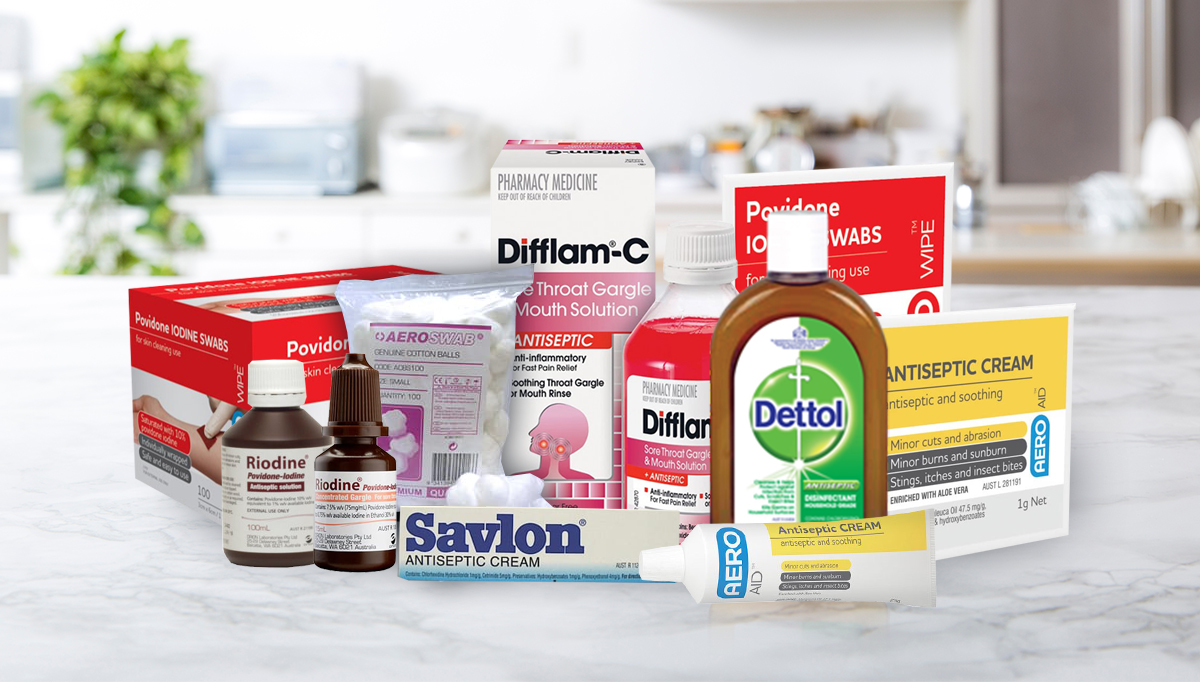
Billions of bacteria and microorganisms can be found in every environment, including on human skin. Most of these bacteria are not harmful to humans, but some microorganisms can be dangerous and even deadly to us.Antiseptics and disinfectants are two types of products that are used to help control harmful microorganisms and prevent infection and disease.While they have many similarities, antiseptics and disinfectants are different products used for different applications.Read on to find out the difference between antiseptics vs disinfectants, plus tips on when and how to use them properly.
Both antiseptics and disinfectants slow or stop microorganisms such as viruses, bacteria and fungi from growing.Where they differ is that antiseptics are used on living tissue, like skin and mucous membranes, while disinfectants are used to sterilise non-living objects such as benchtops and medical devices.
Antiseptics and disinfectants share some of the same ingredients and many of the key chemical agents can be used for both purposes.However, most disinfectants have higher concentrations and should not be used on human tissue because they can cause damage.For example, hydrogen peroxide is used as a disinfectant cleaning agent at concentrations of above 30%. It is also used as an antiseptic agent on living tissue but with concentrations of around 6%.
Antiseptic agents and antibacterial products both work to stop harmful bacteria. However, antiseptics also inhibit viruses and fungi too.
All antiseptic agents stop or slow the growth of microorganisms, but they may work in different ways to achieve that outcome.
For example, certain types of antiseptics cause the cell wall of the microorganism to burst while others target processes inside the cells that stop them from multiplying.Different types of antiseptics include:
Chlorhexidine - used to prevent skin infections or as a mouthwash.
Alcohols – such as isopropyl alcohol and ethyl alcohol are used in hand sanitiser and to disinfect the skin.
Iodinated compounds – such as povidone-iodine are used to prevent or treat infections and may be used in the mouth.
Peroxide and permanganate – used on the skin or for mouth wash.
Halogenated phenol derivative – used in medical-grade soaps.
Antiseptics are used to stop or slow the growth of microorganisms that could cause infection on living tissues. Antiseptic products are used in healthcare settings to prevent or treat infections, as well as hand washing, preparing for surgery and disinfecting mucous membranes before inserting a catheter. They can also be used in domestic settings as antiseptic creams, hand sanitisers and antiseptic wipes etc.Over the counter, antiseptic products shouldn't be used to treat serious injuries such as serious burns, bites or deep wounds. They also shouldn't be used for longer than a week at a time as prolonged use may have adverse outcomes.
Disinfectants typically contain a number of ingredients. The "active ingredient" is the chemical that kills harmful microorganisms by damaging the cell wall or inhibiting cell processes.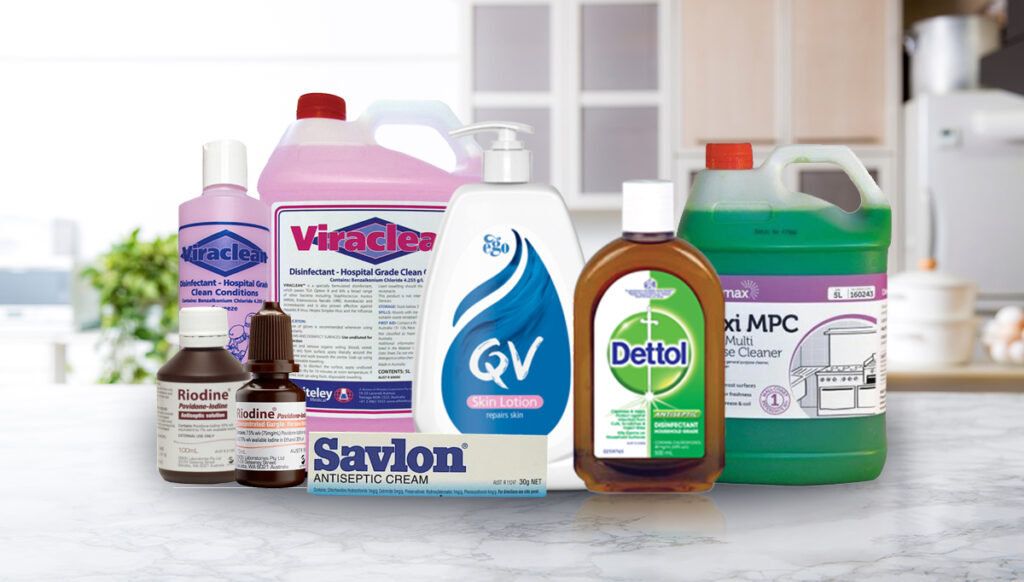
Other ingredients are added to help achieve the specific purpose. For example, surfactants might be added to improve the wetting properties of the formula for cleaning purposes.Some of the common active ingredients include:
Hydrogen peroxide – often viewed as an environmentally friendly choice as hydrogen peroxide breaks down into water and oxygen.
Quaternary ammonium compounds – often used in hospital settings because of their low cost and quick action.
Chlorine compounds – used widely in healthcare settings, especially for cleaning bodily fluids.
Alcohols – such as isopropyl alcohol and ethanol are diluted in water and used to clean inanimate objects.
Disinfectants are chemical agents used to clean and sterilise inanimate surfaces in both health care settings and domestic settings.Different surfaces may require different levels of disinfectant. For example, surgical instruments will need a very powerful disinfectant compared to a domestic countertop.When using disinfectants, the surface should first be cleared of any visible dirt or debris. It is important that the solution is applied in a well-ventilated area.Disinfectant solutions for medical devices, surgical instruments and surfaces in healthcare settings should be used immediately and any leftover solution should be discarded.
Disinfectants and antiseptics are essential for all health care providers and should be included in workplace and school first aid supplies.LFA First Response stocks a wide range of medical supplies for first aid and health care providers, including antiseptic sprays, disinfectant cleaning solutions, Nitrile gloves and more.Place an order online today or get in touch with our friendly customer service team for more information.

In medical emergencies, particularly those involving sudden cardiac arrest (SCA), having immediate access to a defibrillator can mean the difference between life and death. Defibrillators are life-saving devices designed to restore a regular heart rhythm by delivering an electric shock to the heart.
J
Jason Hitch

Mining is a vital industry that powers economies around the globe, and Australia plays a significant role in it, being one of the largest producers of valuable resources like coal, iron ore, and gold.
J
Jason Hitch

Australia is home to some of the world's most venomous snakes, and for those exploring the bush, encountering one is a real possibility. While the chances of a snake bite may be low, knowing how to respond can mean the difference between life and death.
J
Jason Hitch

Daffodil Day, celebrated annually on the 22nd of August, is more than just a date on the calendar; it’s a symbol of hope and resilience for those affected by cancer. Understanding the impact of cancer in Australia, the significance of Daffodil Day, and how you can support those affected by cancer.
J
Jason Hitch