J
Jason Hitch
Being prepared on the water means more than packing a standard first aid kit from the local pharmacy. The marine environment introduces conditions that most general kits are simply not designed to handle: moisture, salt air, UV exposure, physical movement and, critically, distance from professional medical help.
This guide covers the 10 essential items that every marine first aid kit should contain, with practical notes on why each one matters in an Australian boating context. Whether you operate a recreational day boat, a commercial fishing vessel or a charter operation, the right kit depends on your vessel, your crew and how far from shore you travel.
A marine first aid kit is purpose-built for the conditions and injury types specific to vessels operating on the water. Unlike a standard workplace or home kit, it must withstand constant humidity, salt air, UV light and the physical movement of a vessel underway.
Adhesive dressings lose their hold when wet. Cardboard packaging deteriorates. Unsealed compartments allow moisture to compromise consumables long before their expiry date. A purpose-built marine kit uses waterproof or water-resistant storage with individually sealed contents that hold up in the environment where they are needed most.
In Australia, both the Australian Maritime Safety Authority (AMSA) and state maritime safety bodies set requirements for first aid equipment on commercial vessels. Recreational boaters are not subject to the same formal requirements, but the same environmental challenges apply. Selecting supplies matched to your actual conditions is the practical standard to work toward.
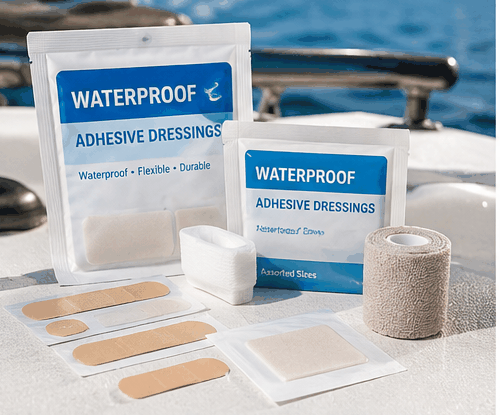
Cuts, lacerations and abrasions are among the most common injuries on any vessel. Rope handling, anchor work, deck hardware and fish handling all create opportunities for skin injuries. Standard adhesive dressings lift and peel within minutes in wet or humid conditions, leaving wounds exposed.
Marine kits should include waterproof adhesive dressings in several sizes, along with self-adhesive conforming bandages that maintain compression even when wet. Look for dressings with strong, moisture-resistant backing rather than standard fabric or paper-backed options. In a salt-laden environment, keeping a wound cleanly covered from the moment of injury reduces the risk of infection significantly.
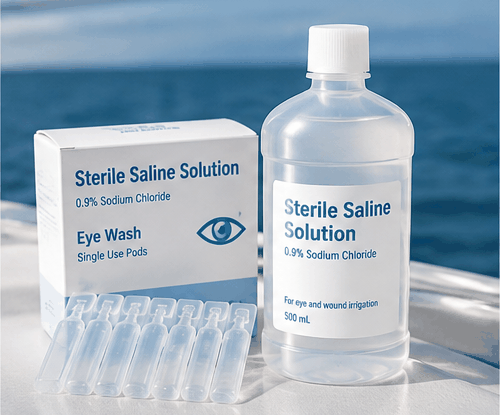
Salt water, engine fuel, oil, cleaning products and airborne debris are all common irritants on vessels of any size. Eye injuries require immediate flushing, and wounds on the water are exposed to environmental contaminants that need to be cleaned out before dressing.
Sterile saline pods are ideal for marine kits: they are single-use, pre-measured, easy to open under pressure and take up minimal space. A sealed saline bottle is a practical alternative for larger kits. Saline is safe for use in eyes and on open wounds, making it one of the most versatile items in any marine first aid kit.
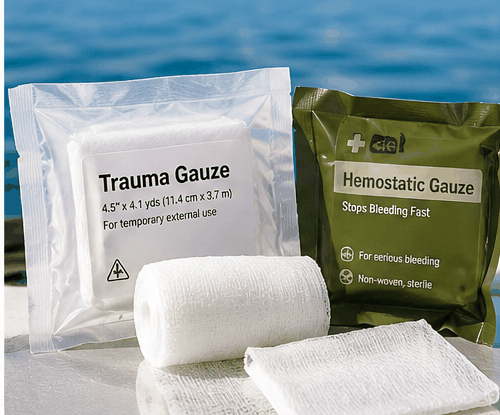
For serious bleeding injuries, standard dressings are not sufficient. Trauma or emergency wound dressings apply controlled pressure to lacerations and puncture wounds, while haemostatic gauze (a type of gauze treated to accelerate clotting) helps manage significant blood loss.
On an offshore or remote trip, the delay between an injury and professional medical attention can be measured in hours. Trauma dressings and haemostatic gauze are essential when response times are extended. If you are not trained in their use, a waterproof reference card or manual included in your kit can guide appropriate application until help arrives.
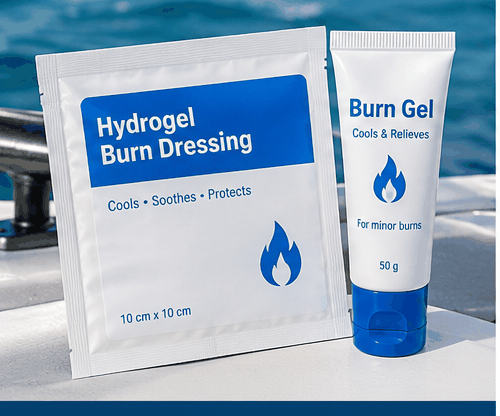
Burn injuries are a genuine risk on any vessel. Engine rooms, galley stoves, exhaust outlets, flares and even prolonged sun exposure without protection all create burn hazards. A hydrogel burn dressing cools the affected area, reduces pain and protects the wound from contamination.
Include both a burn gel or spray for minor burns and at least one larger hydrogel burn dressing for more serious injuries. Burns that are not cooled and covered promptly carry a significantly higher infection risk, particularly in a marine environment where the wound is exposed to heat and salt air. Do not use ice, butter or any other home remedy on a burn; hydrogel is the appropriate first aid response.
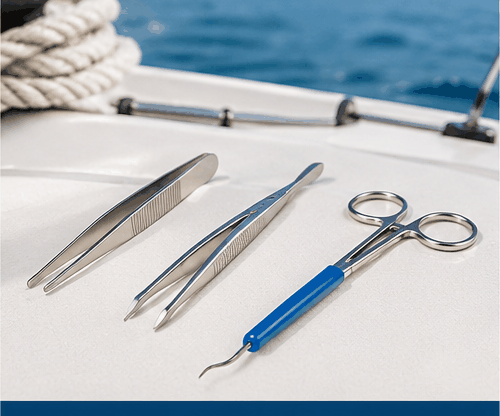
Fishing hook injuries are one of the most distinctly marine first aid scenarios. Hooks can become embedded in fingers, hands, feet and occasionally other areas, and they require careful removal to avoid worsening the injury or introducing infection. Fine-tip forceps and a dedicated hook removal tool allow safe extraction in the field.
Tweezers also assist with splinters, fish spines and debris embedded in wounds. In a marine environment, any puncture wound that is not properly cleaned and dressed carries a heightened infection risk due to exposure to water, bait and organic material. These tools take up very little space and address one of the most common injury types on fishing and charter vessels.
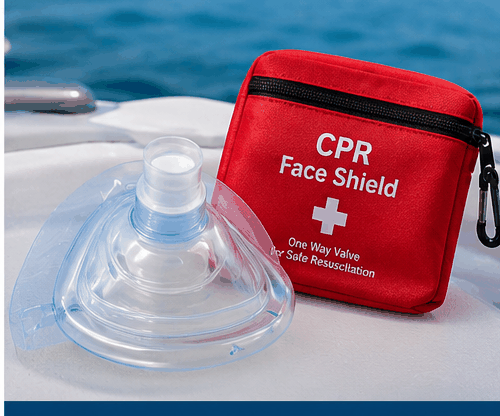
Drowning and cardiac events can occur on the water, and bystanders are often the first to respond. A CPR face shield or pocket mask allows a person to perform rescue breathing safely without direct mouth-to-mouth contact. Pocket masks with a one-way valve provide better protection and a more secure seal than a basic shield.
A compact CPR face shield adds almost no weight or bulk to a kit and provides a practical means of performing assisted ventilation in an emergency. Crew members and passengers on charter or commercial vessels should be familiar with its location in the kit. First aid training remains the most important preparation, but having the right equipment supports that training when it matters.
Hypothermia and shock are real risks on the water, even in Australia. A person who has fallen overboard, even in moderate water temperatures, can lose body heat rapidly. A thermal, or emergency space, blanket retains heat by reflecting body warmth back to the person wrapped in it.
Thermal blankets are also used to manage shock, where maintaining body temperature is an important part of keeping a patient stable while awaiting medical assistance. They are lightweight, compact and take up a fraction of the space of a standard blanket. Every marine first aid kit should carry at least one, and offshore or multi-day vessels should carry two or more.
Triangular bandages are among the most versatile items in any first aid kit. They can be folded into a sling to immobilise an injured arm or shoulder, used as a broad pressure bandage, fashioned into a splint support or folded to pad an injury.
Multiple uses in a compact format make triangular bandages particularly well-suited to kits where space is at a premium. Include at least two in any marine kit, along with a small supply of safety pins. For offshore and commercial vessels, three or more is a reasonable standard given the potential for multiple injuries in a single incident.
Basic over-the-counter pain relief, such as paracetamol, is a practical inclusion in any marine kit for managing minor to moderate pain while a patient is being assessed or transported. Always store medication clearly labelled and check expiry dates regularly. Prescription items require professional medical advice and should not be included without appropriate guidance.
The Rugged Waterproof Plastic Kit is a comprehensive first aid solution designed for demanding Australian workplaces. Its durable, waterproof case helps protect essential supplies from moisture, dust and rough handling. With a broad selection of first aid products, it helps teams stay prepared for a wide range of workplace injuries and emergencies
A marine first aid kit should be matched to the vessel type, the number of people on board and the nature of the trip. A compact kit suited to a solo day fisher is not appropriate for a twelve-passenger charter vessel heading offshore.
| Vessel Type | Crew or Passenger Capacity | Recommended Kit Level |
|---|---|---|
| Recreational day boat | 1 to 4 people | Compact marine kit |
| Fishing or cruising vessel | 4 to 10 people | Standard marine kit |
| Charter or passenger vessel | 10 or more | Commercial-grade marine kit |
| Offshore or workboat | Variable, remote location | Extended kit with trauma supplies |
Commercial operators in Australia should verify first aid requirements directly with AMSA or their relevant state maritime safety authority, as requirements vary by vessel class, passenger numbers and operating area. Recreational operators should use the table above as a practical starting point and scale up based on trip duration and distance from shore.
Where and how a kit is stored directly affects whether it can be used effectively in an emergency.
A marine first aid kit should be inspected before every trip and given a full review at least every six months. Any item used, expired or damaged should be replaced before the next voyage.
Inspection checklist:
A marine first aid kit should include waterproof wound dressings and bandages, sterile saline solution, trauma dressings and haemostatic gauze, burn dressings and burn gel, tweezers and forceps, a CPR face shield or pocket mask, a thermal blanket, triangular bandages, basic pain relief and seasickness medication, and a waterproof first aid manual or reference card. The specific quantities and additional items should be scaled to the number of people on board and the distance from shore.
Quality marine first aid kits use waterproof or water-resistant hard cases with secure seals to protect contents from moisture, spray and humidity. Not all kits marketed as marine kits are genuinely built for these conditions. When selecting a kit, check that the case is fully sealed and that individual consumables are separately packaged to resist moisture exposure. A kit that allows water ingress is not appropriate for use on the water.
Inspect your marine first aid kit before every trip. Replace any items that were used after each outing immediately, before the next departure. Conduct a full restock review at least every six months, checking expiry dates on all consumables and confirming that sealed items remain intact. At the start of each boating season is a practical time for a comprehensive check.
Yes. Offshore trips increase the time between an injury occurring and professional medical help arriving. Kits for offshore use should include trauma dressings, haemostatic wound packing gauze, extended medication supplies, a pocket CPR mask and additional thermal blankets. The greater the distance from emergency services, the more comprehensive the kit needs to be.
The key difference between a marine kit and a general first aid kit is that a marine kit is designed specifically for the conditions and injury types found on the water. This includes waterproof storage, supplies suited to marine injuries such as fish hook wounds, burns and eye irrigation, and items like thermal blankets for shock and hypothermia management. Standard kits use packaging and adhesives that deteriorate quickly in humid, salt-laden conditions and do not address the longer delays in accessing professional medical help that are common in offshore or remote boating scenarios.
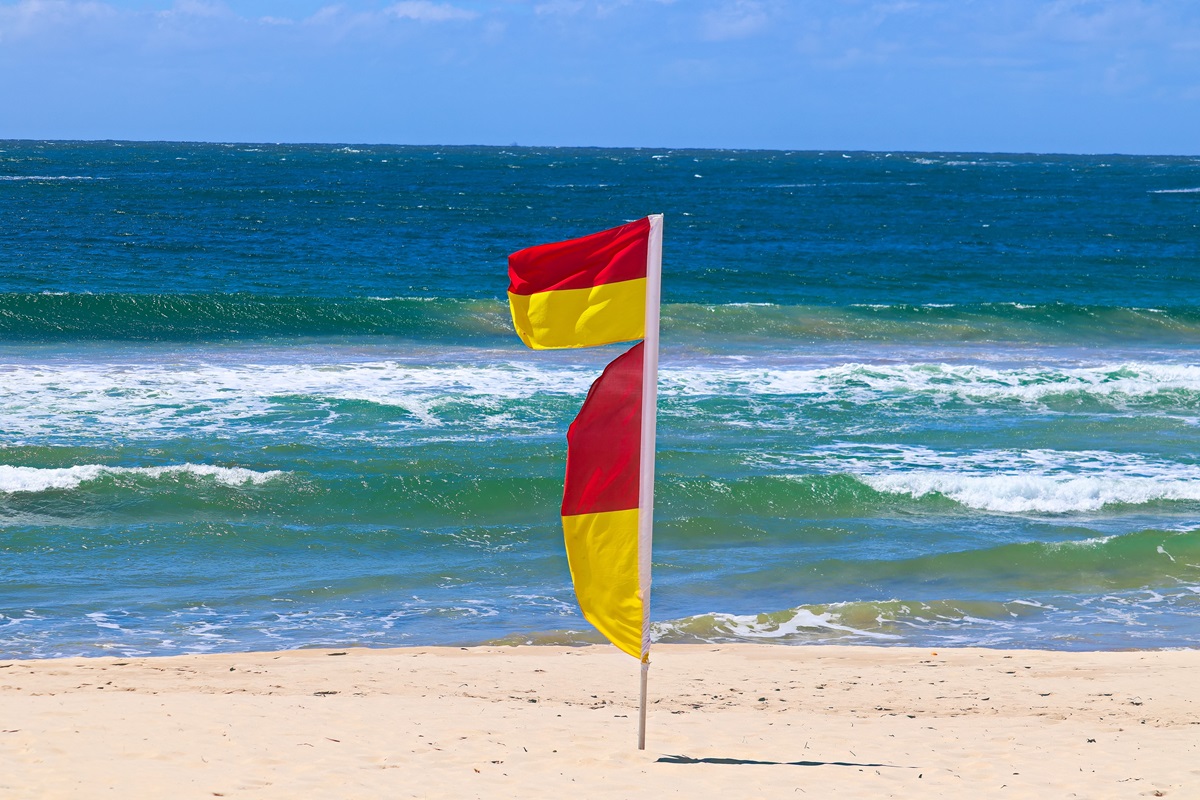
Surfing is not just a sport in Australia; it's a way of life. With our stunning coastlines and world-renowned waves, the land down under attracts surf enthusiasts from all over the globe. However, the thrill of riding the waves also comes with certain risks. Surfers and beach goers can sometimes find themselves in situations where first aid knowledge is crucial. In this blog, we'll delve into the importance of surf life saving first aid, common injuries in surfing, prevention and the essent
J
Jason Hitch
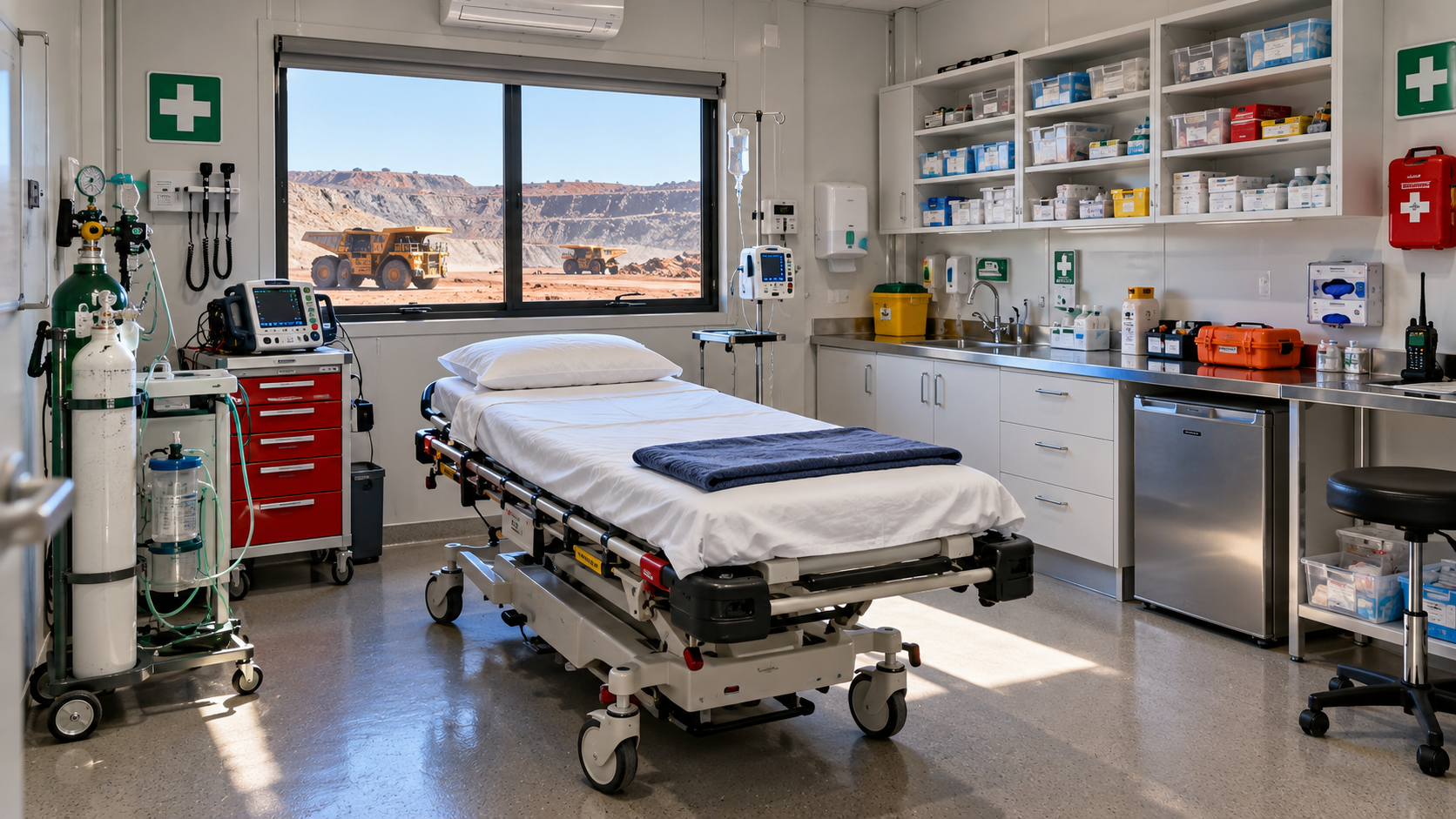
In this guide, you will learn all about the Australian mining site first aid requirements, including equipment and facilities for different remote operations.
J
Jason Hitch

Learn how to choose the right workplace defibrillator based on your environment, workforce, compliance needs, maintenance and on-going AED support in this guide.
J
Jason Hitch
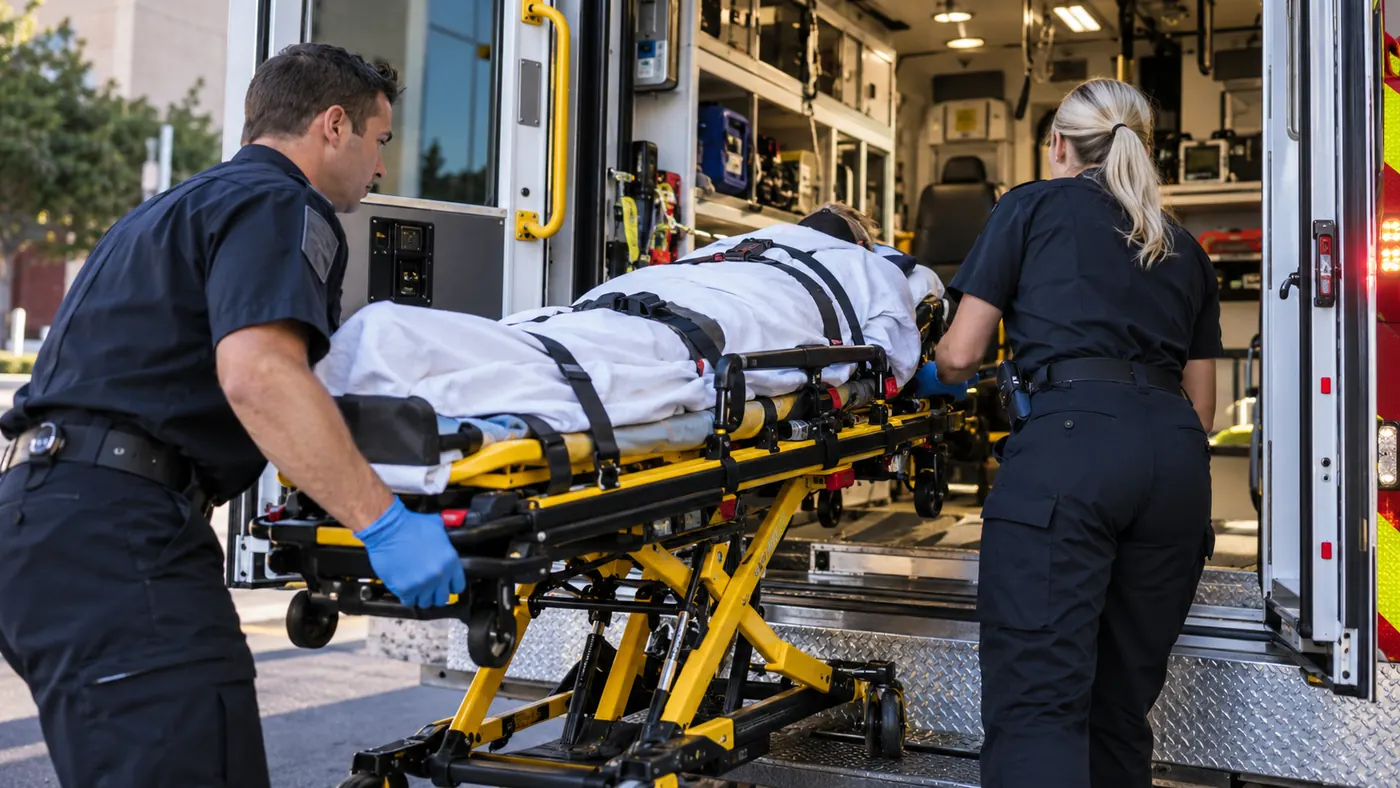
Looking for workplace stretcher that suits your industry? Compare types, safe working loads, environments and key features to make an informed choice.
J
Jason Hitch