J
Jason Hitch
 First aid readiness and emergency response on Australian mine sites
Australian mine sites carry some of the highest workplace injury risks of any industry. Mining site first aid requirements are a legal obligation under federal and state regulations.
This guide is written for HSE managers, site safety managers, procurement officers and operations teams who need a definitive, practical reference for first aid compliance in Australian mining. It covers what the law requires, how those requirements translate into specific equipment and staffing, how provisions vary by state and site type and how to manage supply reliably across remote or multi-site operations.
PCBUs operating mine sites in Australia must provide first aid equipment, facilities and trained personnel appropriate to the workplace and mining is explicitly recognised as a high-risk industry requiring more comprehensive provisions than standard workplaces.
Under the Work Health and Safety Act 2011 (Commonwealth and harmonised states), a Person Conducting a Business or Undertaking (PCBU) has a primary duty of care to ensure, so far as is reasonably practicable, the health and safety of workers.
Safe Work Australia's First Aid in the Workplace Code of Practice (2021) provides the primary practical guidance for compliance. Under the Code, the key factors that determine first aid requirements for any workplace are:
Mining operations score at the extreme end of nearly every one of these criteria. Work is physically demanding and hazardous, sites are often remote, and the distance from hospitals or emergency services can be measured in hours rather than minutes. This makes comprehensive first aid provisioning not just legally required but operationally critical.
Safe Work Australia's Code of Practice recommends a risk-based approach to first aid planning. For mining operations, work through the following steps:
Safe Work Australia guidance on first aider ratios distinguishes between low-risk and high-risk workplaces:
Remote sites should plan for higher ratios to account for shift coverage, geographic spread across the site, and the additional time that emergency services will take to respond.
A first aid room is generally required when 200 or more workers are present at a single workplace. In practice, any mining operation with a permanent or semi-permanent workforce should consider a dedicated first aid facility, regardless of headcount. The severity of potential injuries, the distance from external medical services, and the complexity of emergency response all justify a first aid room well below the 200-worker threshold.
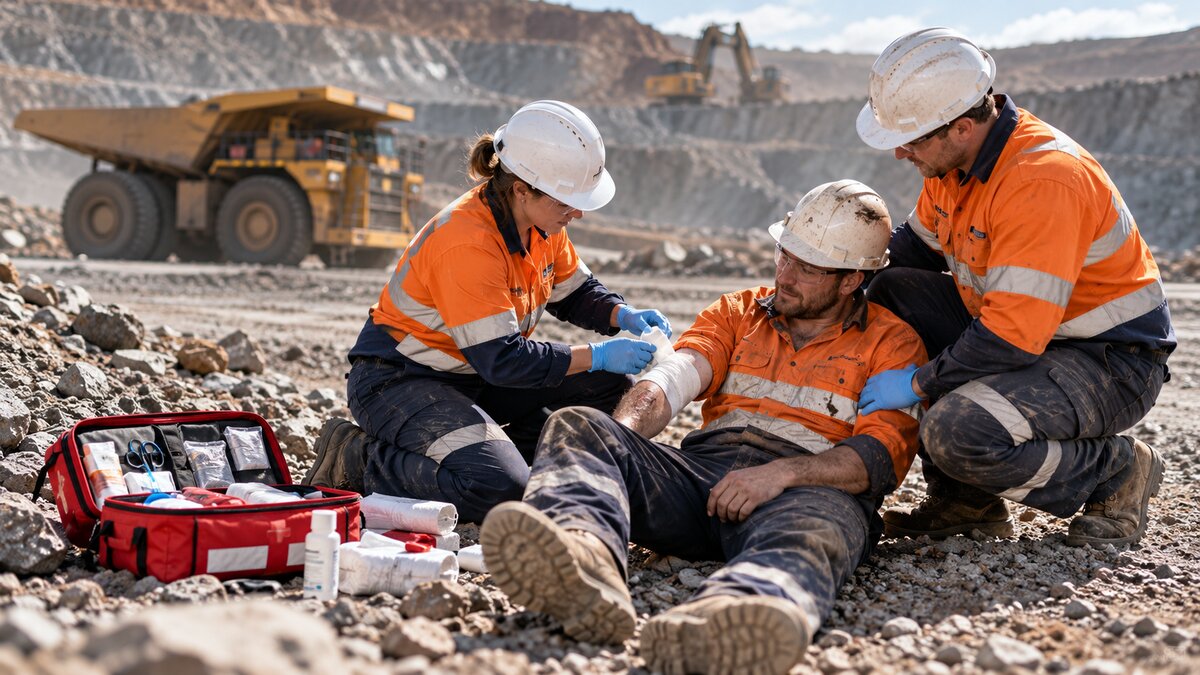 Appropriate first aid supplies should reflect the risks present at each mine site
First aid kits for mining operations must reflect the hazards present on site. A generic workplace kit is not sufficient. Kit contents should be determined through a formal risk assessment aligned with the site's hazard profile.
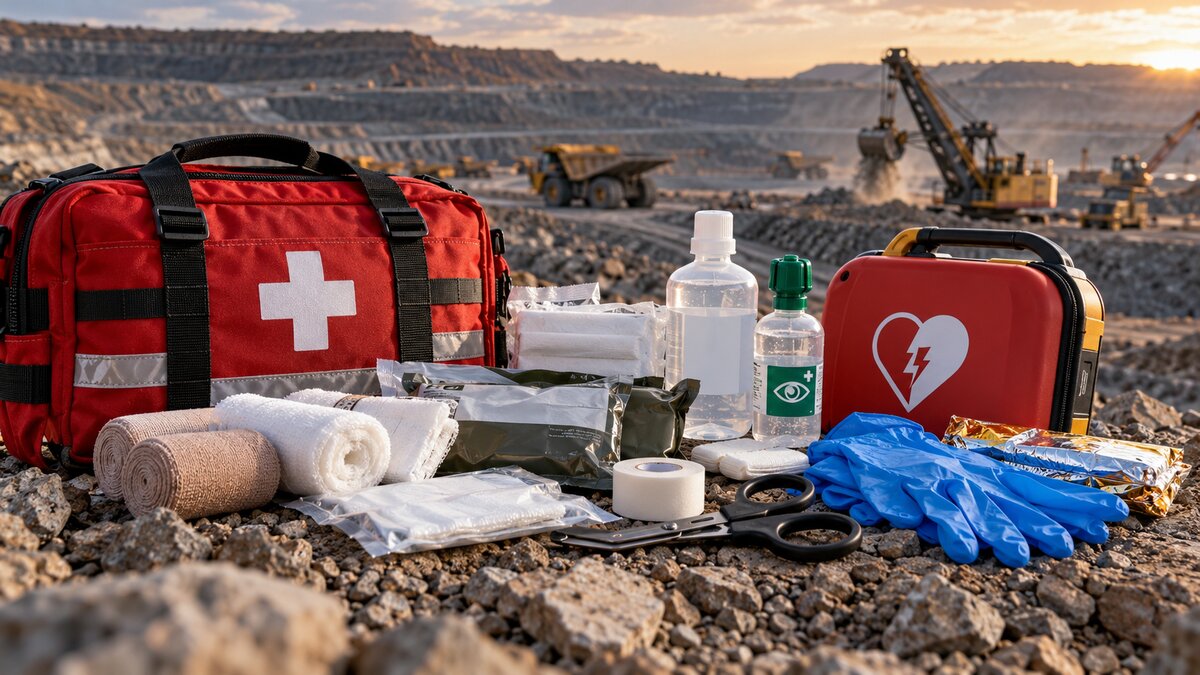
The following supplies represent the minimum expected contents of a first aid kit for a high-risk mining environment, consistent with Safe Work Australia guidance:
Wound care and dressings:
Resuscitation and airway:
Personal protective equipment:
Additional essentials:
This represents a minimum baseline. Most mining sites will require expanded kits based on site-specific risk assessment.
For sites where traumatic injury is a realistic operational risk which includes virtually all open-cut, underground and heavy equipment operations, the following supplies should be added:
Haemorrhage control:
Thoracic injuries:
Immobilisation and packaging:
Burns:
Advanced wound care:
Supplemental oxygen is a fundamental component of emergency medical response on remote mine sites. Where response times from paramedics exceed minutes, oxygen therapy can significantly alter patient outcomes.
Required oxygen and resuscitation equipment:
An Automated External Defibrillator (AED) is strongly recommended for every mine site, and should be considered mandatory for any operation where emergency services response time exceeds five minutes. In the context of remote Australian mining, that threshold is almost universally met.
Defibrillation delivered within the first three to five minutes of a cardiac arrest can increase survival rates dramatically. In remote mining environments, waiting for an ambulance is not a viable strategy.
AED equipment to maintain on site:
Australia's mining regions are home to some of the world's most venomous snakes. The Pilbara and Kimberley in WA, Central and North Queensland, and the Northern Territory all have significant populations of taipans, brown snakes, tiger snakes and death adders. Snake encounter risk on mining sites is real and documented.
Key principle: Antivenom is not a site-level supply. It requires hospital administration and correct species identification. The role of on-site first aid is to buy time through correct pressure immobilisation technique and to manage evacuation.
Required snakebite supplies:
Additional remote-area considerations:
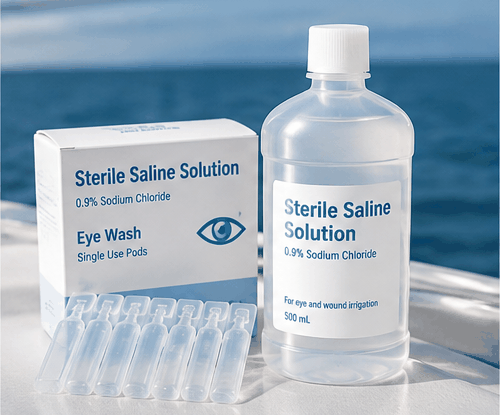
Eye injuries are among the most frequently reported incidents in mining environments, caused by dust, debris, chemical splash and UV exposure. Response time matters: prompt, thorough eye irrigation significantly reduces long-term damage.
Eye wash supplies for mine sites:
Eye wash stations should be accessible within 10 seconds of travel from any area where chemical splash hazards are present.
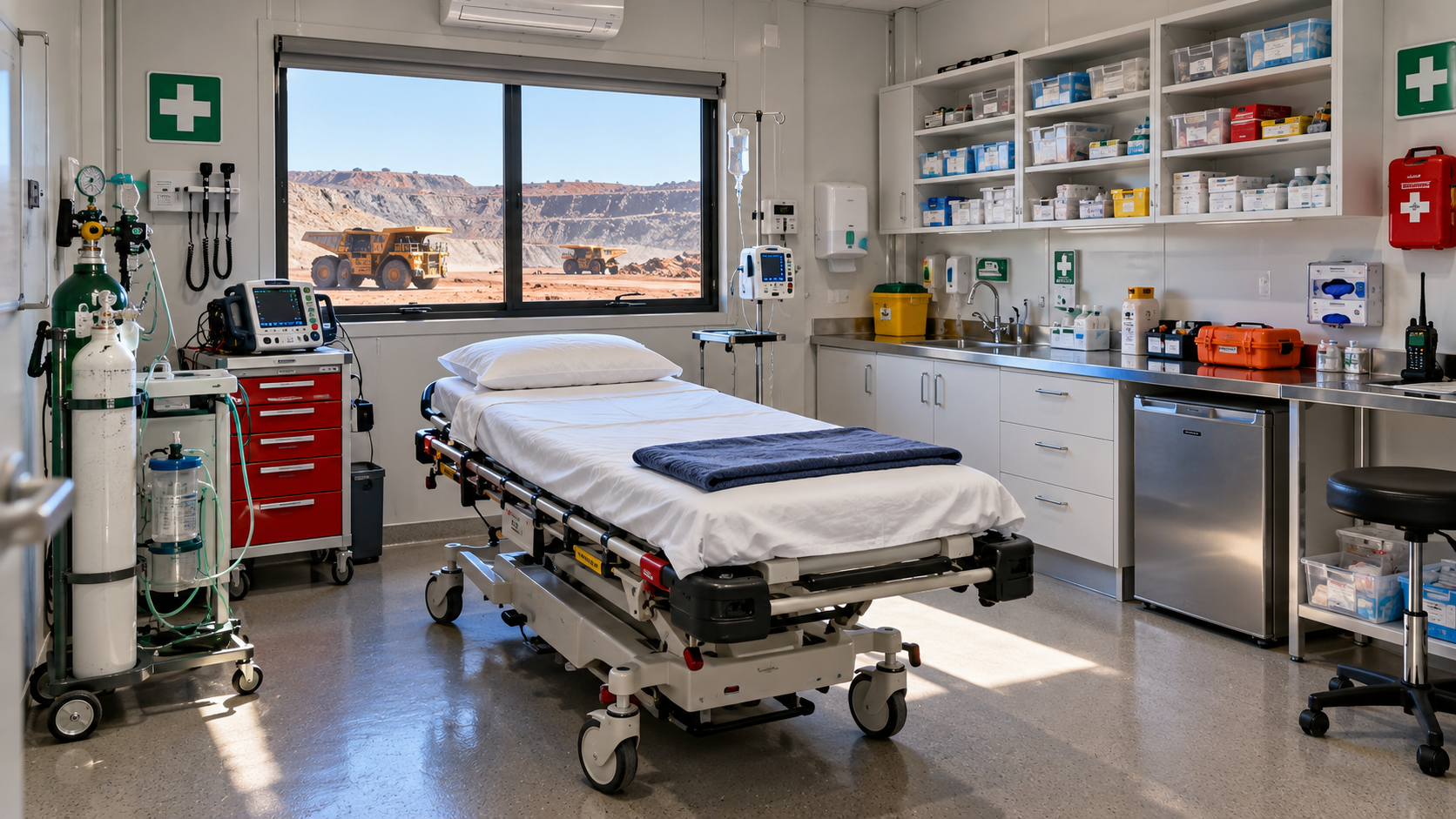
For sites with a dedicated first aid room, Safe Work Australia and state mining regulators expect the room to be properly equipped and fit for clinical assessment and treatment. Standard requirements include:
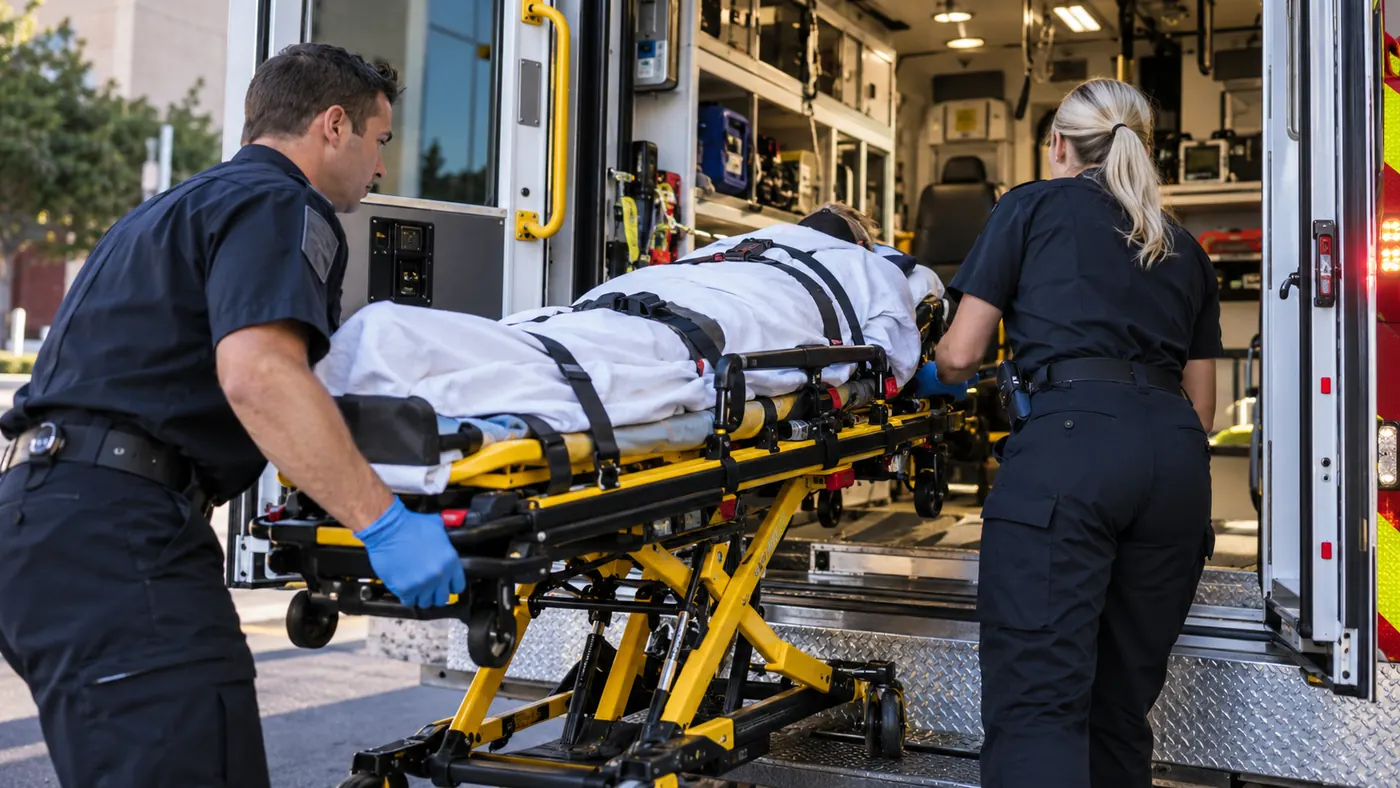
Getting an injured worker safely from the point of injury to definitive medical care is one of the most operationally complex challenges on a remote mine site. Patient handling equipment must match the site's terrain, access constraints and likely injury types.
For surface operations, folding and rigid stretchers combined with vehicle-based transport are standard. For underground operations, patient packaging and movement through confined spaces, shafts and drives requires purpose-designed equipment.
Recommended patient handling equipment by site type:
| Equipment Type | Application |
|---|---|
| Folding aluminium stretcher | General surface use, vehicle transport |
| Basket/Stokes stretcher | Steep or rough terrain, confined spaces |
| Mine rescue stretcher | Underground extraction, tight spaces |
| Vacuum mattress | Full-body immobilisation for spinal injuries |
| Rigid spinal board with straps | Spinal injury management and transfer |
| Pelvic binder | Pelvic fracture management during transport |
| Patient transport straps and restraints | Securing patients during vehicle or helicopter transfer |
Underground operations should document evacuation routes and confirm that patient packaging equipment is compatible with shaft dimensions, drift widths and cage capacities. Emergency response drills should include patient extraction scenarios.
Managing first aid inventory for remote and multi-site operations is a procurement and compliance challenge in its own right. Expired stock, delivery delays and inconsistent kitting across sites are common failure points.
Remote mine sites often face extended periods between supply deliveries. Short-dated products reach expiry before they can be used, creating both a compliance gap and a cost burden. Strategies to manage this include:
For operations managing first aid supply across multiple sites, a standing supply agreement with a specialist medical supplier simplifies procurement, ensures consistency and reduces the administrative burden on site teams.
A reliable supply arrangement should include:
When selecting a first aid and medical supply partner for mining operations, evaluate suppliers against the following criteria:
Operational capability:
Product quality and compliance:
Commercial and administrative:
First aid equipment is only effective when workers are trained to use it correctly. Training records must be maintained and certifications refreshed at required intervals.
Nationally recognised training units relevant to mine site first aiders include:
For remote and high-hazard mining environments, additional training should be considered:
Under the Work Health and Safety Regulations 2017, all PCBUs must provide first aid equipment appropriate to the workplace. For mining operations, classified as high risk, this includes comprehensive first aid kits, resuscitation equipment and defibrillators. State mining regulations may impose additional requirements. Specific kit contents should be determined through a formal risk assessment reflecting the hazards present on that site.
Safe Work Australia recommends a minimum of one qualified first aider for every 10 workers in high-risk environments such as mining. Remote sites with limited access to emergency services may require higher ratios to ensure continuous coverage across all shifts. Some large or complex operations also require on-site paramedics or occupational health nurses under their Principal Hazard Management Plan.
A first aid room is generally required when a workforce reaches 200 or more workers at a single workplace. However, for mining operations, a first aid room is strongly recommended regardless of workforce size, given the severity of potential injuries and the distance from external medical services. Most permanent or semi-permanent mine sites should have dedicated first aid facilities.
While there is no single universal legislative mandate specifying AEDs on every mine site, Safe Work Australia and state mining regulators strongly recommend their presence, particularly where emergency services response times exceed five minutes. This applies to the vast majority of remote Australian mining operations. An AED should be considered a non-negotiable item for any site with a permanent workforce.
Look for a supplier with demonstrated experience in mining supply, reliable delivery capability to remote and regional locations, long product expiry dates, TGA-registered products where applicable, and responsive account management. A specialist mining medical supplier should be able to provide complete site kitting, bulk pricing, multi-site delivery management and technical product guidance.
A first aid kit is a portable or fixed supply of consumables and basic equipment used to treat injuries at the point of care. A first aid room is a dedicated facility fitted out for examination, treatment and patient management, including a treatment bed, wash facilities, resuscitation equipment, oxygen and comprehensive supplies. First aid kits are required on all mine sites; a first aid room is required based on workforce size and risk profile.
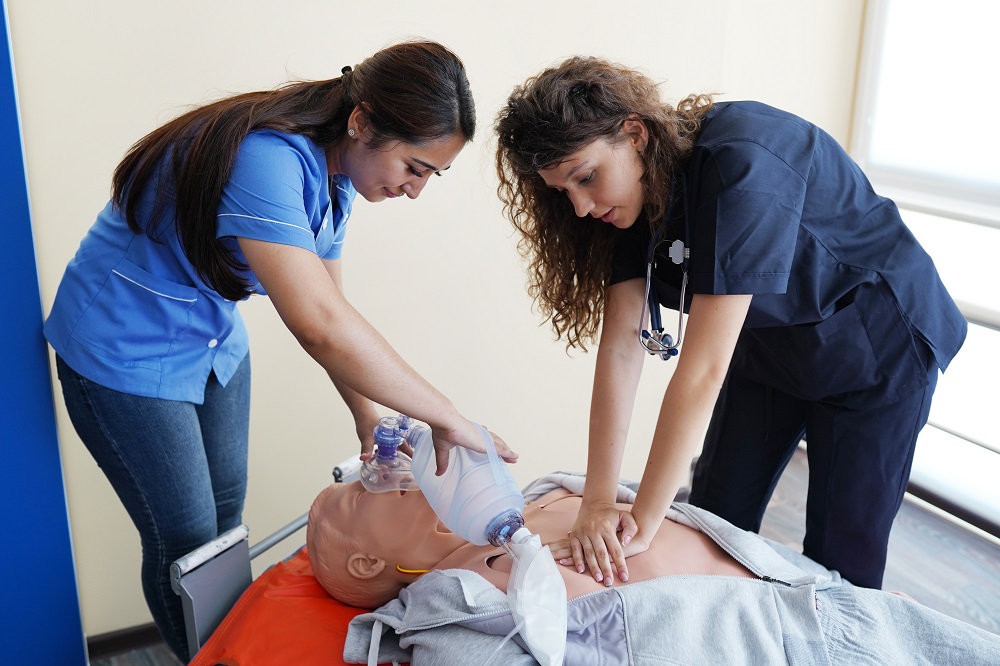
Advances in medical equipment over recent decades have contributed to faster and more effective health care. When medical personnel and first responders undergo proper training using medical training equipment and simulation scenarios, they respond faster and more confidently in an emergency.
J
Jason Hitch
What should a marine first aid kit contain? In this guide, discover 10 essential items for Australian boats, plus practical storage and preparation tips.
J
Jason Hitch

Learn how to choose the right workplace defibrillator based on your environment, workforce, compliance needs, maintenance and on-going AED support in this guide.
J
Jason Hitch
Looking for workplace stretcher that suits your industry? Compare types, safe working loads, environments and key features to make an informed choice.
J
Jason Hitch