J
Jason Hitch
Selecting the right workplace stretcher is one of the most practical and consequential decisions a procurement manager, nurse unit manager, or WHS officer can make. The correct stretcher reduces the risk of staff injury, supports patient dignity, meets Australian compliance requirements, and performs reliably in the environments where it is needed most. This guide covers every major industry setting, from hospitals and aged care facilities to mining sites and marine vessels, so you can make a confident, informed purchasing decision.
Choosing the wrong workplace stretcher is a common and avoidable source of manual handling injuries, patient incidents, and equipment failure. Under Australian WHS legislation, workplaces and healthcare facilities have a duty to provide appropriate patient handling equipment that is fit for purpose and safe for both staff and patients.
Safe working load (SWL) ratings are a critical starting point. Using a stretcher that exceeds its rated SWL is not only unsafe but constitutes a reportable breach under WHS obligations.
Beyond SWL, different surfaces, patient conditions, and environments demand fundamentally different stretcher designs. A stretcher suited to a hospital corridor will not perform adequately on a mining site. Equipment that performs well on a vessel deck will differ from what is needed in a day surgery recovery bay. Getting this decision right protects people, reduces liability, and supports operational continuity.
Understanding the core categories of stretchers is the essential first step in the selection process. Each type is engineered for a specific purpose, and using the wrong type in the wrong setting introduces unnecessary risk.
A pole stretcher is a lightweight patient transport stretcher supported by two strong side poles. It is designed to help trained responders move an injured or unwell person from an incident area to a safer location or suitable medical transport.
A spine board stretcher is designed to assist with transferring and extricating patients from vehicles and confined spaces. Its rigid design makes it relevant for emergency response teams, industrial sites, mining operations and workplaces where difficult-access incidents may occur.
A scoop stretcher separates into sections so trained responders can position it around a patient. This helps reduce unnecessary movement while the person is lifted from the ground or another surface. The Alloy Scoop Stretcher measures 430 x 800 x 1900 mm. It may suit emergency response, industrial, mining and rescue settings where careful patient handling is required.
A wheeled medical stretcher may be more suitable for hospitals, medical centres, first aid rooms and other clinical settings where patients are moved regularly. The Stryker Prime X Stretcher has a 317.5 kg weight capacity, a 76.2 cm wide patient surface and a 7.6 cm comfort mattress. It also includes an integrated transfer board, oxygen bottle holder, centre-locking brake system, adjustable backrest and IV receptacles.
The most suitable stretcher for any facility depends on the environment, patient profile, staff requirements, and operational demands specific to that setting. The following sections provide direct recommendations for each major industry.
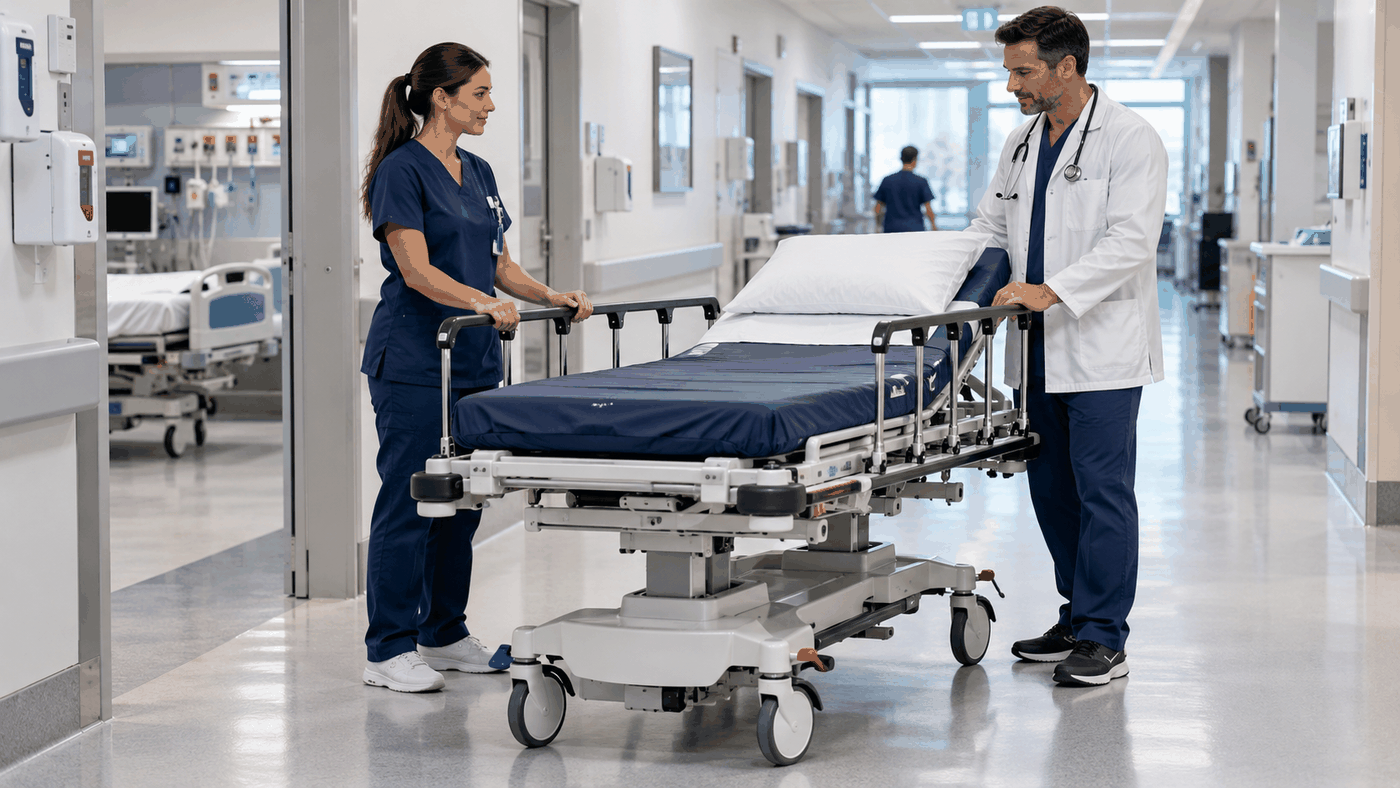
For hospitals and day surgery centres, the recommended stretcher types are hospital trolleys, transport stretchers, and bariatric stretchers, selected based on the clinical context and patient demographic.
Key selection criteria for clinical settings include:
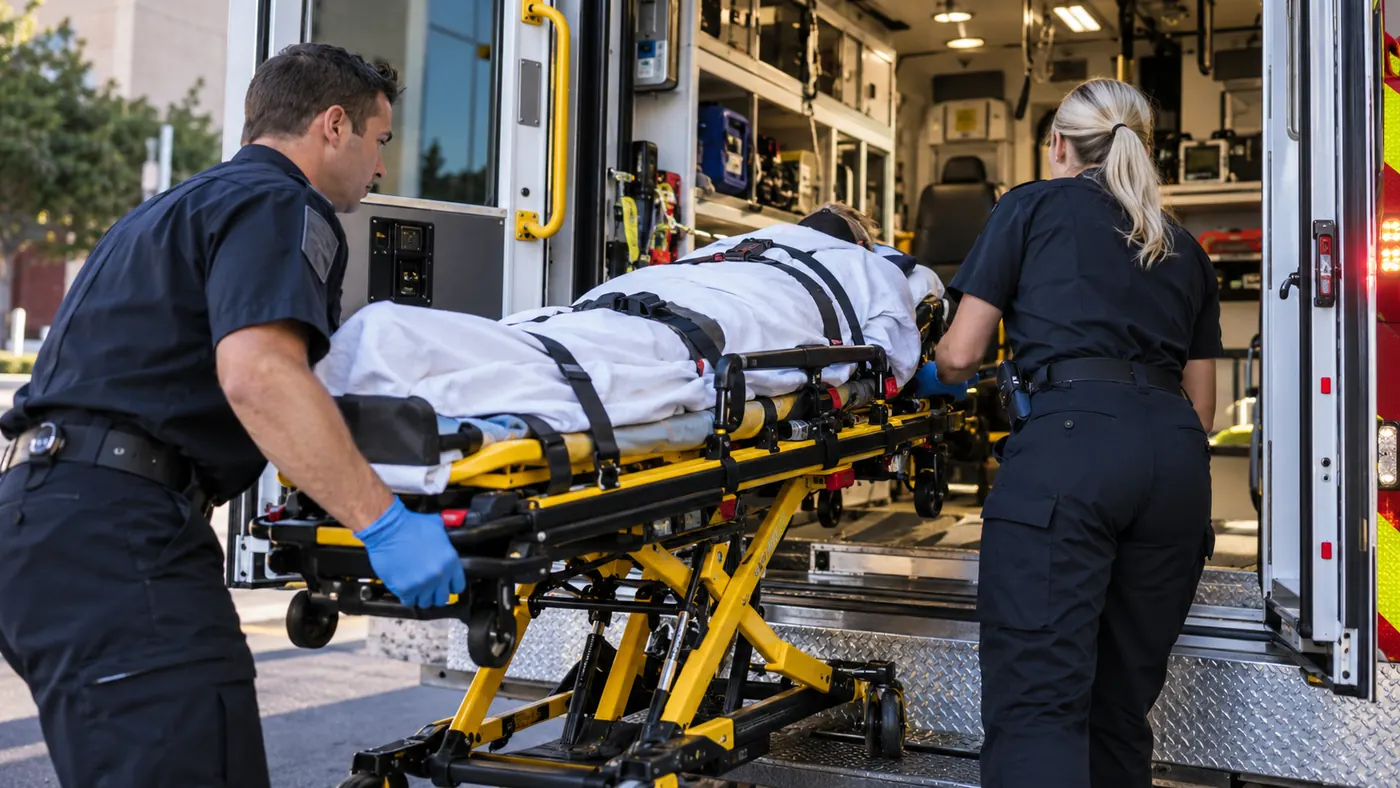
For ambulance services and patient transport providers, transport stretchers, scoop stretchers, and folding stretchers are the core equipment categories.
Key selection criteria for patient transport operations include:
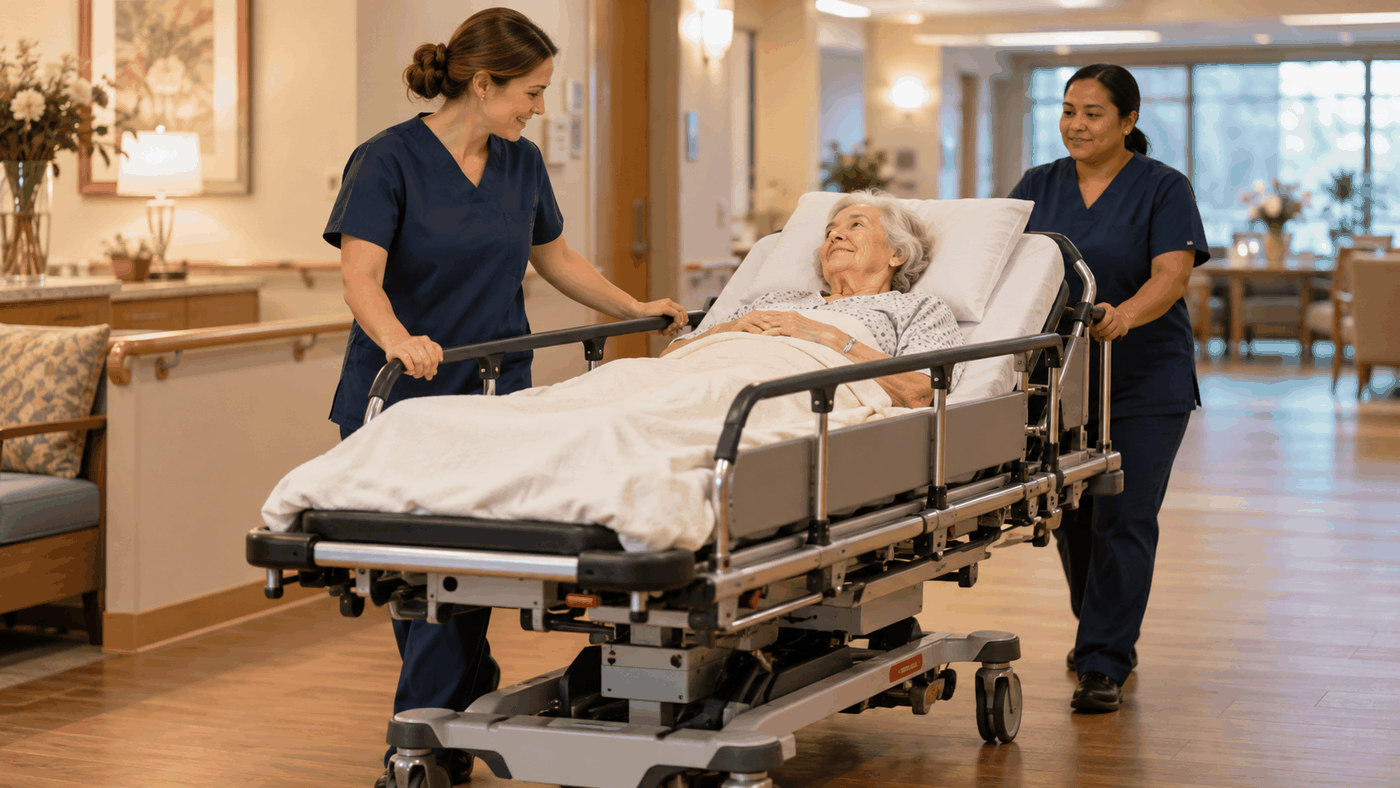
For aged care facilities, the recommended equipment includes evacuation stretchers for emergency scenarios and transport trolleys or folding stretchers for daily patient movement needs.
Key selection criteria for aged care settings include:
For medical centres and specialist clinics, examination stretchers, clinical trolleys, and portable stretchers are the most appropriate options.
Key selection criteria for clinic settings include:
For mining sites and other industrial workplaces, the most suitable stretcher types are scoop stretchers, basket stretchers, folding stretchers, and confined space rescue stretchers, depending on the site hazard profile.
Key selection criteria for mining and industrial settings include:
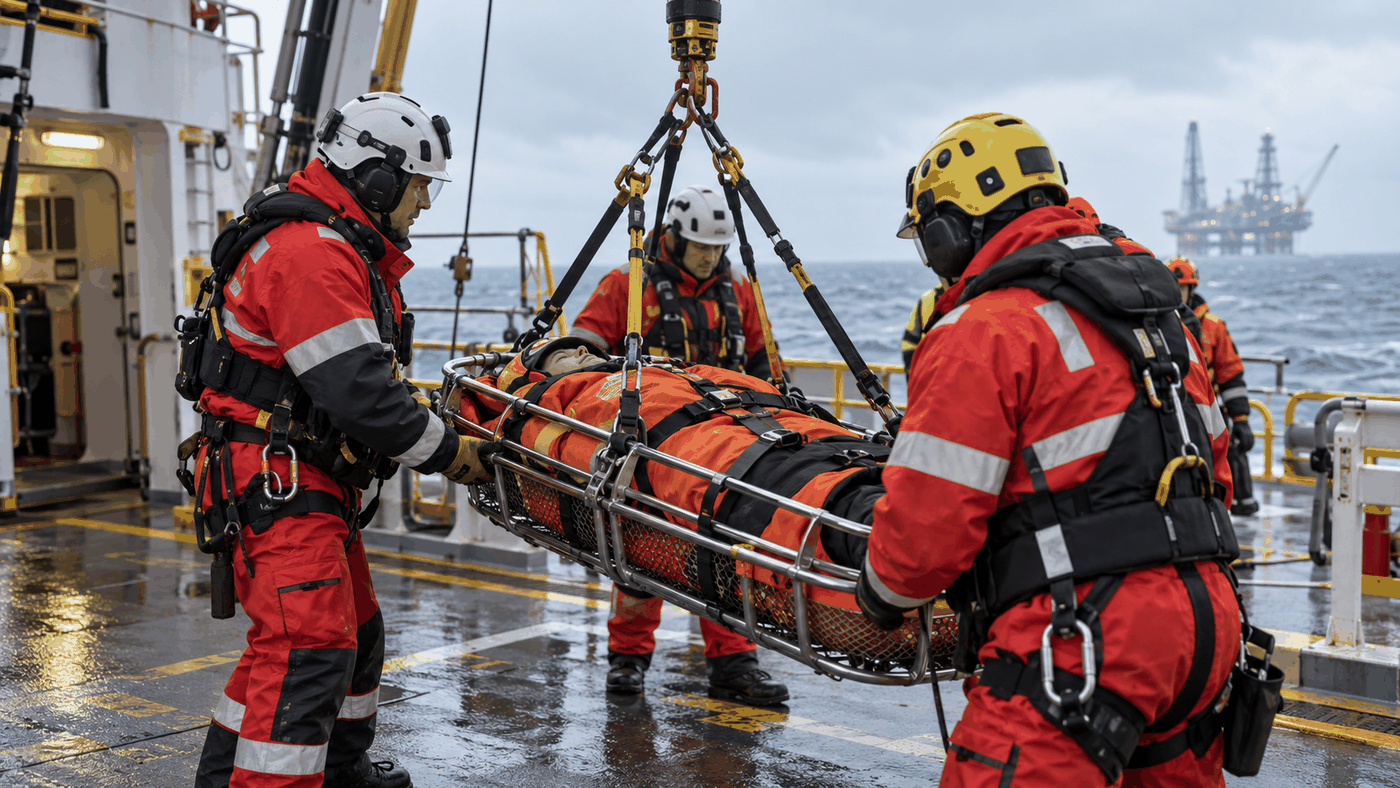
For marine vessels and offshore environments, basket stretchers, folding stretchers, and scoop stretchers are the most appropriate options.
Key selection criteria for marine settings include:
Use the table below to compare the most important features across stretcher types and applications.
| Feature | Why It Matters | What to Look For |
|---|---|---|
| Safe Working Load (SWL) | Ensures patient and staff safety. Exceeding SWL is a WHS breach. | Minimum 150kg for general use. 300kg or above for bariatric applications. |
| Frame Material | Affects durability, weight, and corrosion resistance. | Aluminium for lightweight transport. Steel for heavy-duty clinical use. Polymer for marine. |
| Surface and Upholstery | Supports infection control and patient comfort. | Wipe-clean, antimicrobial-rated covers for clinical settings. |
| Adjustability | Supports patient positioning and reduces manual handling risk. | Height adjustment, backrest angle, Trendelenburg positioning where clinically indicated. |
| Portability and Storage | Critical for transport, emergency, and site-based use. | Folding frame, compact dimensions, integrated carry handles or straps. |
| Locking Mechanisms | Maintains safety during transport and stationary use. | Locking castors, restraint straps, vehicle anchor points. |
| Ease of Cleaning | Supports infection prevention and reduces maintenance time. | Smooth welds, removable pads, chemical-resistant surfaces. |
| Spare Parts and Support | Ensures operational continuity after purchase. | Confirmed local Australian supplier with stock of replacement components. |
A reliable stretcher supplier will answer these questions clearly and without hesitation. Use this checklist before committing to any purchase.
An evacuation stretcher is the most suitable option for emergency evacuation scenarios. These stretchers are specifically engineered for movement through corridors, down stairwells, and across uneven terrain during fire and emergency events. They are lightweight, foldable, and designed to reduce friction on stairs. Hospitals, aged care facilities, and high-rise commercial buildings should hold evacuation stretchers as a dedicated piece of emergency equipment, separate from standard transport or clinical trolleys.
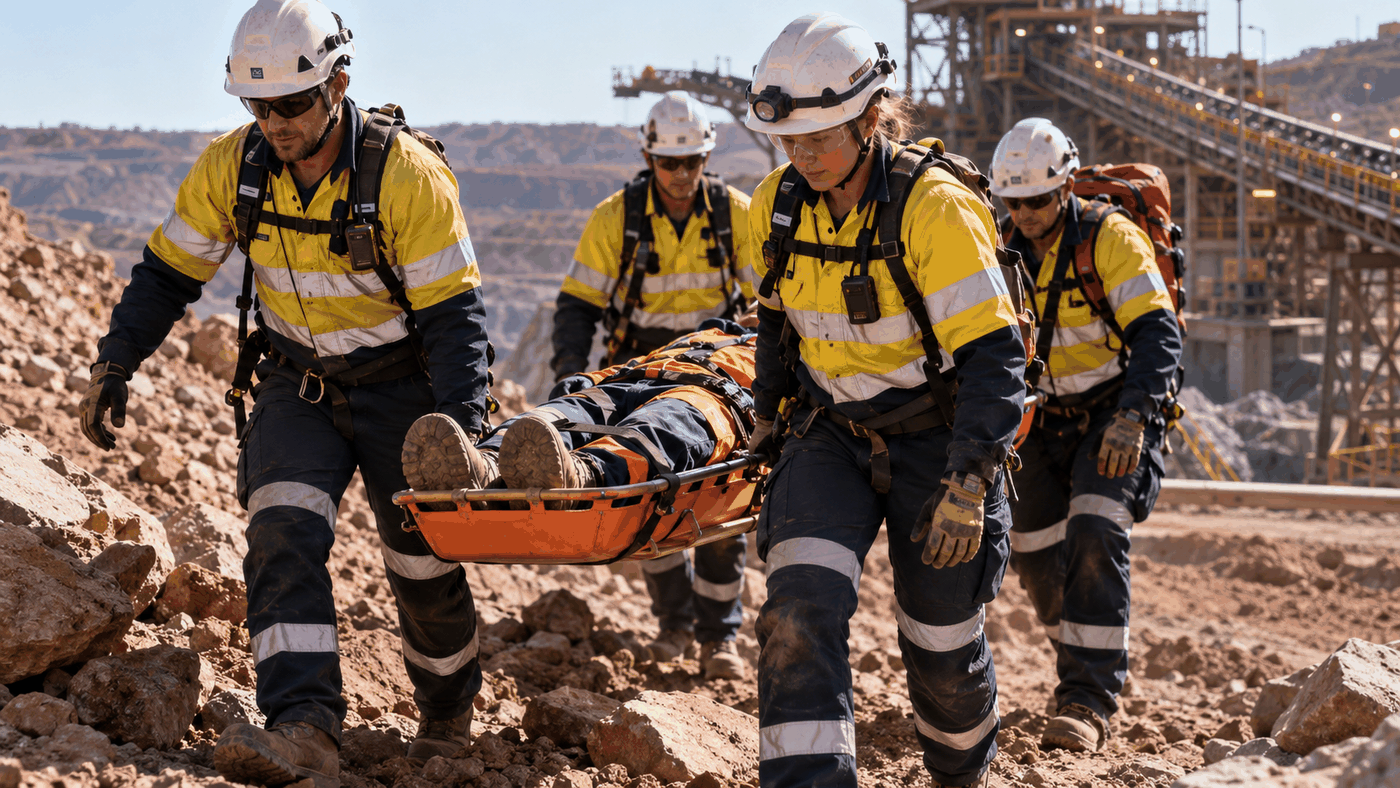
Mining sites should carry a combination of stretcher types matched to their specific hazard profile. A scoop stretcher is suitable for trauma response and patient extrication on flat or open ground. A basket stretcher, also called a Stokes litter, is required for confined space rescue because it can be oriented vertically for extraction through restricted openings. Folding stretchers are useful for remote or underground first aid stations where storage space is limited.
Marine environments require stretchers constructed from corrosion-resistant materials, including stainless steel frames or polymer components, to withstand saltwater and humidity exposure. Basket stretchers are essential for vessel evacuation, particularly where hoist or crane transfer may be required. Scoop stretchers are appropriate for on-deck trauma response. Folding stretchers suit vessels with limited below-deck storage.
A scoop stretcher splits into two longitudinal halves and slides under a patient from both sides without requiring the patient to be lifted or rolled, making it ideal for trauma and suspected spinal injury. A basket stretcher is a rigid, enclosed frame that cradles the entire patient and can be used in both horizontal and vertical orientations. If your site requires confined space rescue or vertical extraction, a basket stretcher is necessary. A scoop stretcher does not support vertical use.
Australian WHS legislation requires workplaces to provide first aid equipment appropriate to the nature and size of the work carried out, including the types of hazards present. For many industrial, construction, and mining environments, this includes a stretcher as part of the first aid kit inventory. The specific requirement varies by industry, workforce size, and hazard classification.

Learn how to choose the right workplace defibrillator based on your environment, workforce, compliance needs, maintenance and on-going AED support in this guide.
J
Jason Hitch
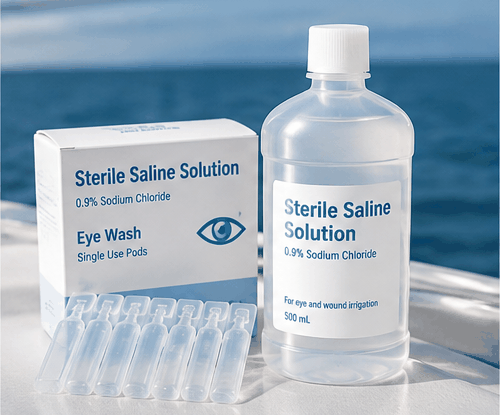
What should a marine first aid kit contain? In this guide, discover 10 essential items for Australian boats, plus practical storage and preparation tips.
J
Jason Hitch
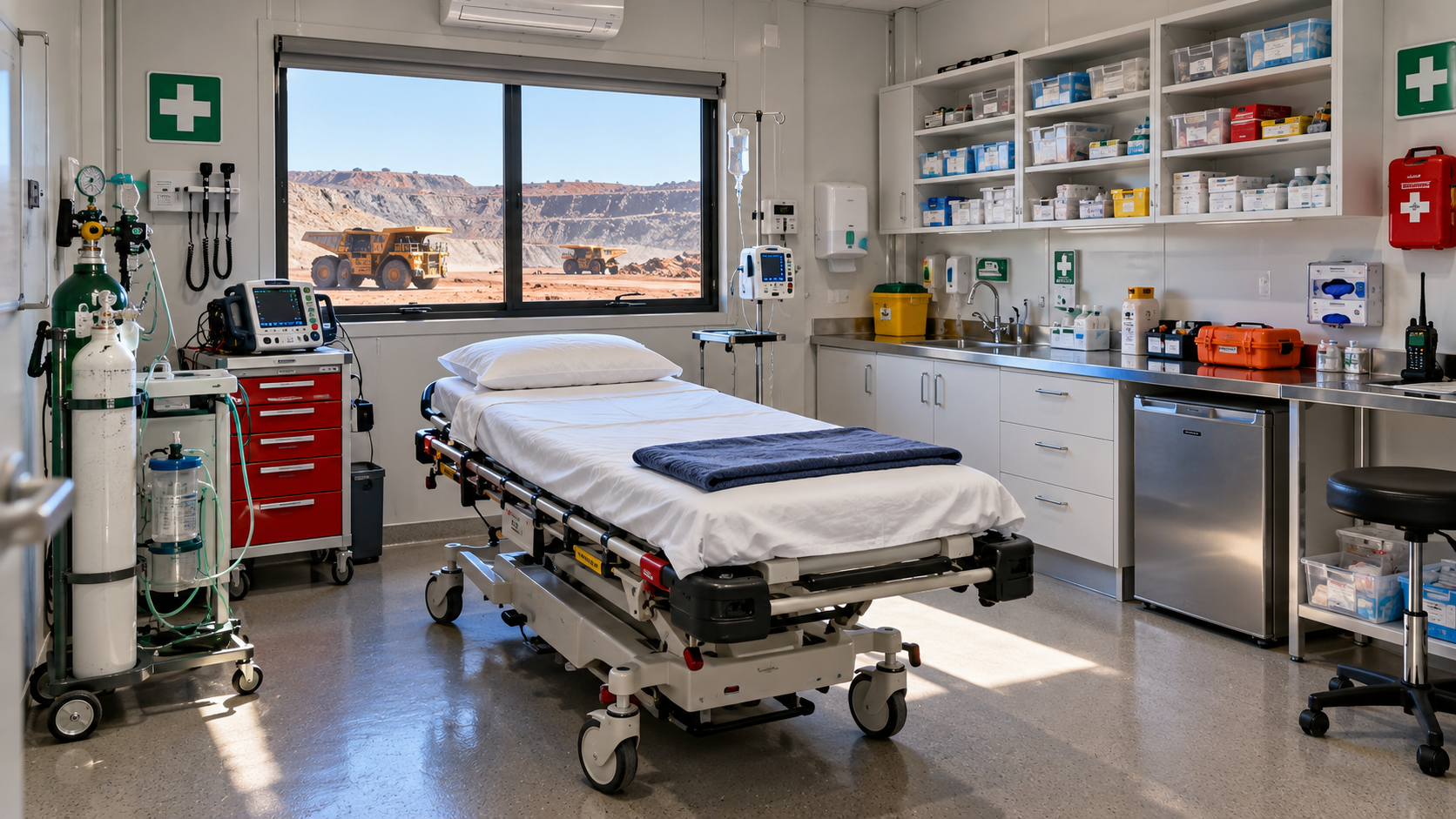
In this guide, you will learn all about the Australian mining site first aid requirements, including equipment and facilities for different remote operations.
J
Jason Hitch
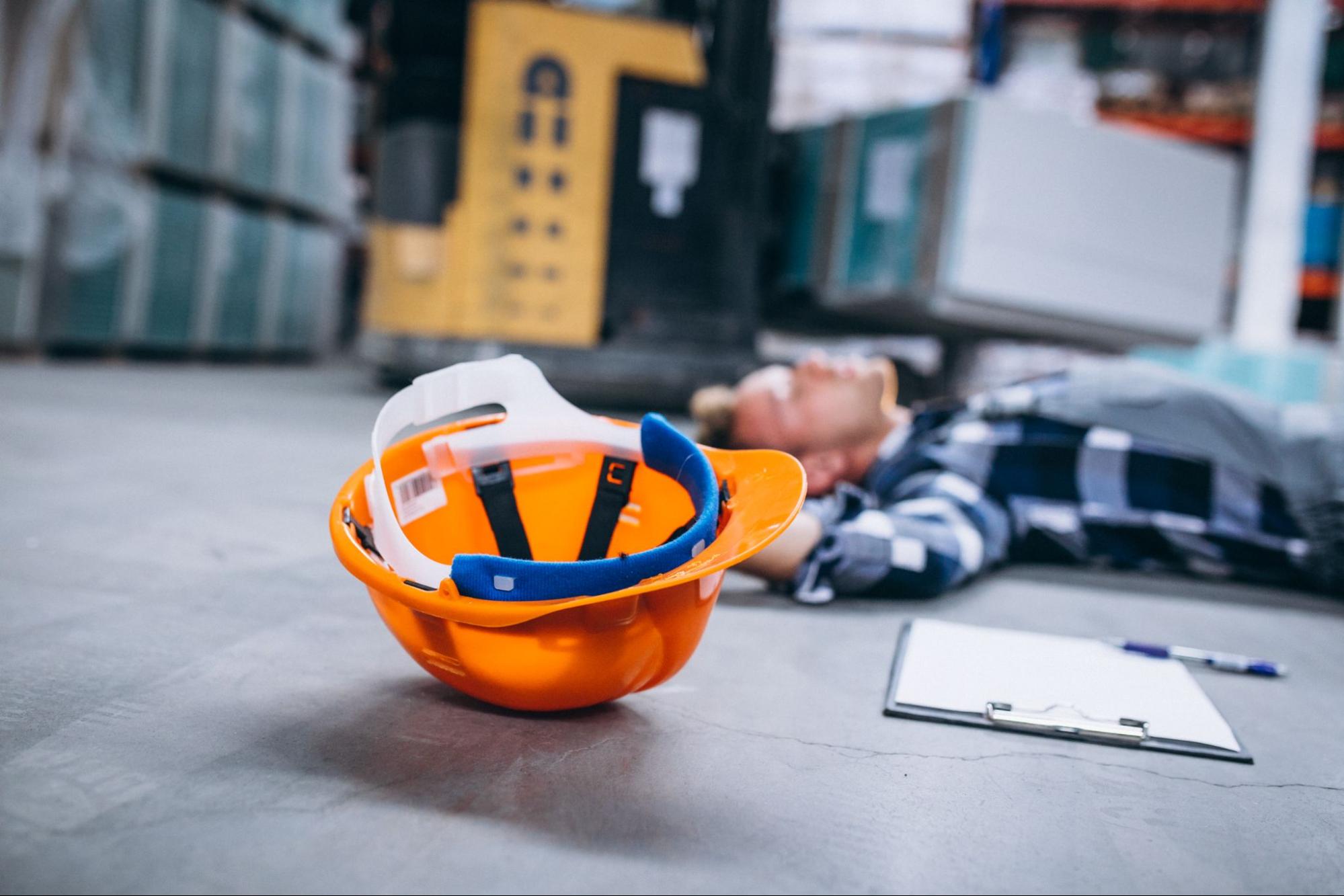
Get first aid for construction right with LFA First Response. Learn about first aiders, kits, placement and compliance for Australian worksites.
J
Jason Hitch