J
Jason Hitch
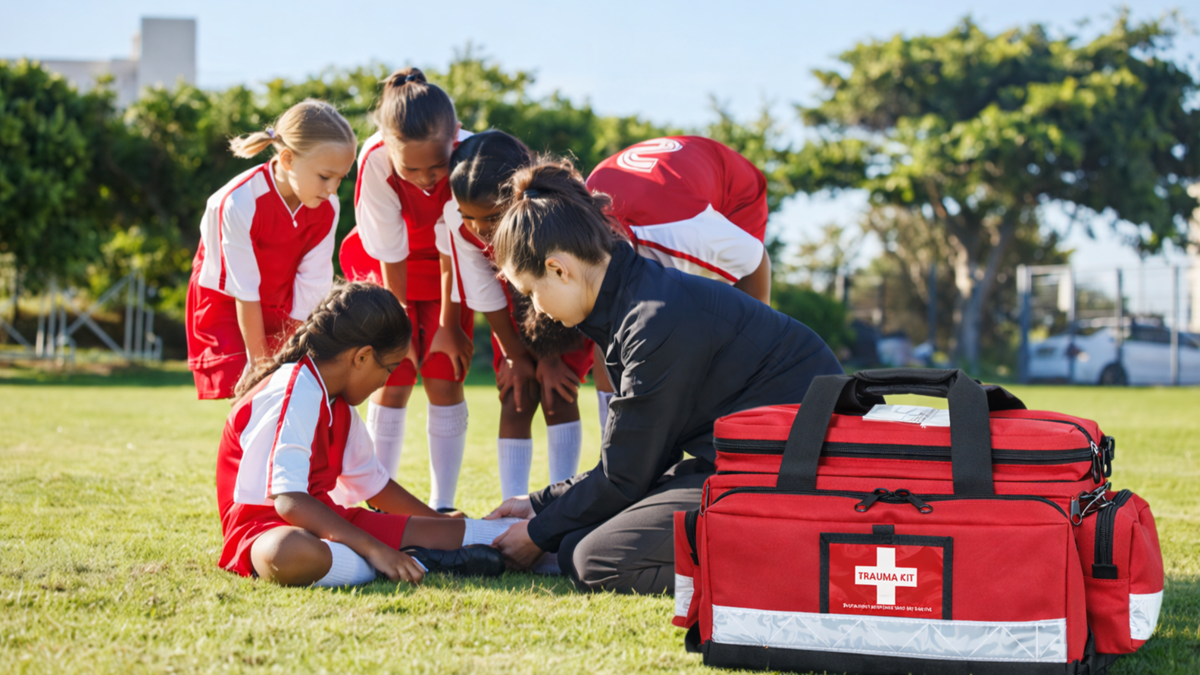
It's the start of a new school year, and the last thing any principal wants is a compliance gap when an emergency strikes.
A scraped knee in the playground is one thing. A student's first-ever anaphylactic reaction with no adrenaline autoinjector on site? That's a negligence claim waiting to happen.
The 2025 updates to Safe Work Australia's First Aid in the Workplace Code of Practice have reshaped what "compliant" looks like for Australian schools. Add in state-specific mandates from Victoria's Department of Education, NSW SafeWork, and Queensland's updated procedures, and you've got a patchwork of requirements that can overwhelm even the most organised WHS officer.
This first aid kit checklist cuts through the complexity. Below, you'll find exactly what your school needs—category by category—to meet 2026 standards and protect your students and staff.
The regulatory landscape has shifted. Here's what school administrators need to know:
Safe Work Australia's Model Code of Practice now emphasises risk-based assessments over generic checklists. That means a woodwork room needs different provisions than a library. One-size-fits-all kits no longer satisfy compliance.
Victorian schools face the most prescriptive requirements in the country. The Department of Education's scaling formula means a school with 1,000+ students needs at least 12 first aid kits plus one additional kit per 100 people—and a dedicated first aid room.
NSW and Queensland mandate general-use adrenaline autoinjectors in every school, regardless of whether any enrolled student has a diagnosed allergy. This reflects research showing nearly half of school anaphylaxis events involve students with no prior diagnosis.
The Australian Resuscitation Council (ARC) has updated CPR guidelines, reinforcing 100–120 chest compressions per minute at a depth exceeding 5cm for adults. Staff training must align with these 2025 standards.
The former Australian Standard AS 2675 for first aid kits has lapsed. Schools must now reference Safe Work Australia's Code of Practice and their state education department guidelines for kit contents.
Use this checklist to audit your current supplies. Every item—from disposable gloves to emergency thermal blankets—serves a specific purpose in a school environment, covering everything from playground scrapes to life-threatening emergencies.
Item | Quantity (Per Kit) | 2026 Compliance Note |
Adhesive dressings (assorted, hypoallergenic) | 50+ | Latex-free is now standard due to allergy prevalence |
Sterile gauze swabs (7.5cm x 7.5cm) | 10 | For wound cleaning with saline |
Non-adherent wound pads | 6 | Critical for playground abrasions—won't stick to clotting blood |
Combined/absorbent pads | 2 | For significant bleeding or deep lacerations |
Sterile eye pads | 4 | Contoured pads for eye injuries from sports or debris |
Schools go through plasters for minor cuts faster than any other consumable. Rather than constantly reordering individual boxes, LFA's first aid kit refills let you restock wound care supplies in one bulk purchase—no hunting for individual SKUs.
Item | Quantity (Per Kit) | 2026 Compliance Note |
Conforming bandages (5cm, 7.5cm, 10cm) | 3 of each | For securing dressings |
Heavyweight crepe bandages | 2 | Essential for sprains during sport—provides compression |
Triangular bandages (cotton/calico) | 2 | Must be cloth, not paper—paper can't support limb weight |
Playground injuries account for a significant portion of school first aid incidents. Sprains, strains, and soft tissue injuries need proper compression bandaging, not just an ice pack and a "walk it off."
Item | Quantity (Per Kit) | 2026 Compliance Note |
Disposable nitrile gloves | 10 pairs | Latex is obsolete in schools—allergy risk too high |
Resuscitation face shield (one-way valve) | 1 | ARC guidelines emphasise rescuer protection |
Alcohol-free antiseptic wipes | 10 | Alcohol damages tissue and causes pain in children |
Hand sanitiser | 1 | For pre- and post-treatment hygiene |
Clinical waste bags | 2 | For safe disposal of bloodied dressings |
Item | Quantity (Per Kit) | 2026 Compliance Note |
Stainless steel shears (blunt-nosed) | 1 | Tuff-cut style for cutting clothing safely |
Splinter probes (single-use, sterile) | 5 | Preferred over reusable tweezers for hygiene |
Stainless steel tweezers | 1 | For debris removal |
Saline ampoules (15ml or 30ml) | 10 | Single-use—large bottles lose sterility once opened |
Instant cold packs | 2 | For swelling, bruises, and soft tissue injuries |
Emergency thermal blanket | 1 | For treating shock while awaiting an ambulance |
Item | Notes |
|---|---|
Current first aid guide | Must reflect 2025 ARC guidelines (check DRSABCD flowchart is current) |
Concussion Recognition Tool (CRT6) | Now required in Victorian portable/excursion kits |
Incident report forms | For legal documentation and WHS compliance |
If auditing and restocking kit-by-kit sounds tedious, it is. LFA's school first aid kits come pre-stocked with basic first aid essentials to meet Australian workplace compliance standards. One order replaces hours of spreadsheet wrangling.
Anaphylaxis is the emergency that keeps school nurses awake at night. A reaction can escalate from hives to airway closure in minutes.
Under Victoria's Ministerial Order 706, every school must stock at least two general-use adrenaline autoinjectors—even if no enrolled student has a diagnosed allergy. NSW and Queensland have similar mandates.
Adrenaline autoinjectors: Both Junior (150mcg for children 15–30kg) and Adult (300mcg for children over 30kg) devices. Current TGA-approved options include EpiPen, Anapen, Jext, and the newly registered Neffy nasal spray.
ASCIA Action Plan (orange, General Use): Must be stored with devices—updated December 2025 for 2026.
Administration log: To record time and dose for paramedics.
Insulated storage container: Autoinjectors must be kept away from heat and light but never refrigerated.
Here's where many schools fall short: autoinjectors must be unlocked and easily accessible. If your EpiPens are locked in the front office and a student collapses in the canteen, you have a problem.
Wall-mounted EpiPen stations—ideally alarmed to alert staff when opened—are becoming best practice. Position them in high-traffic areas: canteens, staff rooms, and near outdoor eating spaces.
Adrenaline autoinjectors have a shelf life of just 12–18 months. Tracking expiry dates across multiple devices on a large campus is a logistical headache. LFA's wholesale model means you can stock up at the start of the year and set calendar reminders for quarterly checks—without paying retail markup on replacements.
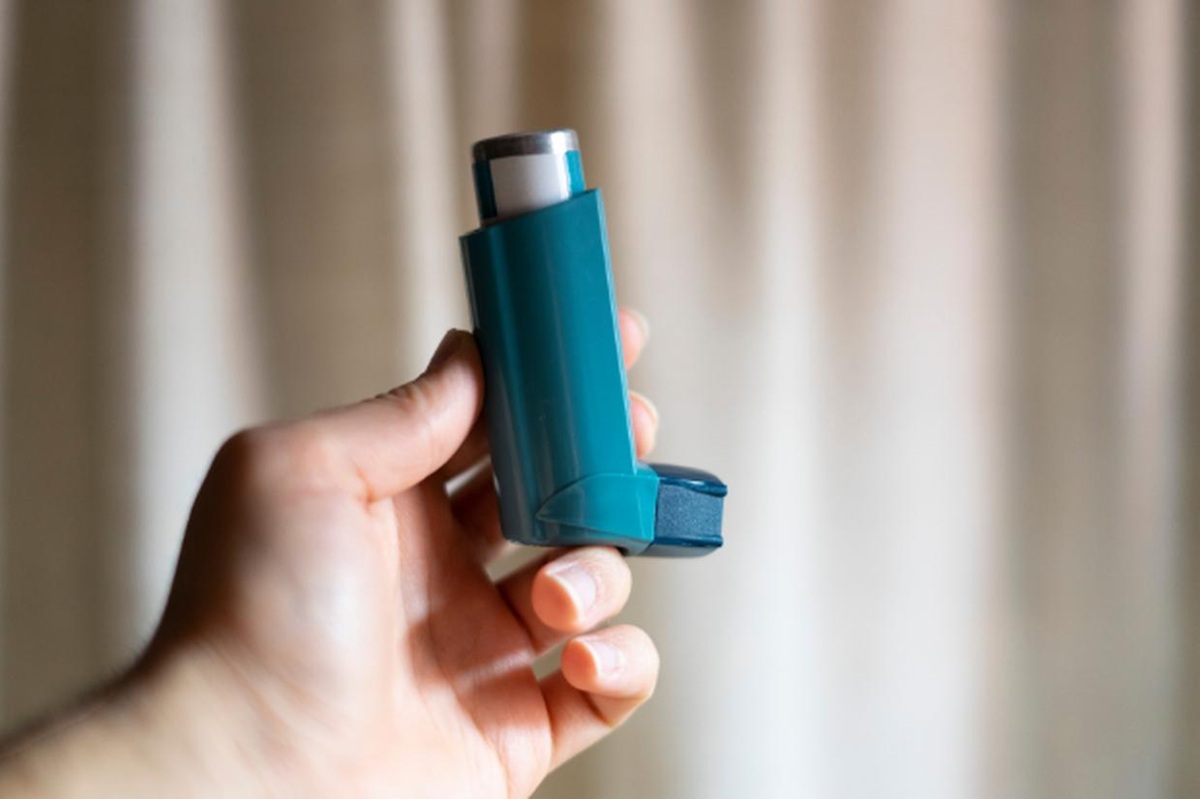
Asthma is one of the most common chronic medical conditions in Australian children. Every school should maintain at least two Asthma Emergency Kits (AEKs)—one stationary, one portable for excursions—plus an additional kit for every 300 students.
Blue/grey reliever medication (Salbutamol): Brands include Asmol, Ventolin, or Bricanyl. Schools can purchase these without a prescription under Schedule 3 provisions.
Spacer devices (x2 minimum): Spacers increase medication delivery to the lungs by up to 50%.
Paediatric face masks: For younger students who can't seal their lips around a mouthpiece.
Asthma First Aid Plan: The 4x4x4 protocol must be clearly visible.
Spacers in emergency kits are single-person, single-use. Once a student uses a spacer during an asthma emergency, it cannot be cleaned and reused for another student. It either goes home with that student or gets disposed of—and the kit needs immediate restocking.
LFA's asthma kits include spare spacers so you're not caught short after an incident. For larger schools, keeping a stock of replacement spacers on hand avoids gaps in coverage.

For schools with bushland surrounds, large ovals, or any excursion program, a dedicated snake bite module is non-negotiable.
The Pressure Immobilisation Technique (PIT) is the Australian standard for snake and funnel-web spider bites. But here's the problem: research shows both medical professionals and laypeople frequently fail to achieve correct bandage tension under pressure.
Standard crepe bandages don't cut it. You need heavyweight bandages with visual tension indicators—graphic rectangles that become squares when stretched to the correct pressure (55–70 mmHg for lower limbs, 40–70 mmHg for upper limbs).
LFA's snake and spider bite kits include TGA-approved tension indicator bandages used by State Ambulance services. When a teacher is applying a bandage under extreme stress, that visual feedback can mean the difference between effective treatment and a bandage that's too loose to slow venom spread.
Tension indicator bandages (10cm x 10.5m stretched)
Foam or aluminium splint
Marker pen (to mark bite site on bandage)
Clear PIT instructions
In any snake bite emergency situation, never wash the bite site (venom samples help identify the species). Never remove bandages until hospital evaluation. Keep the victim completely still—bring transport to them, not the other way around.
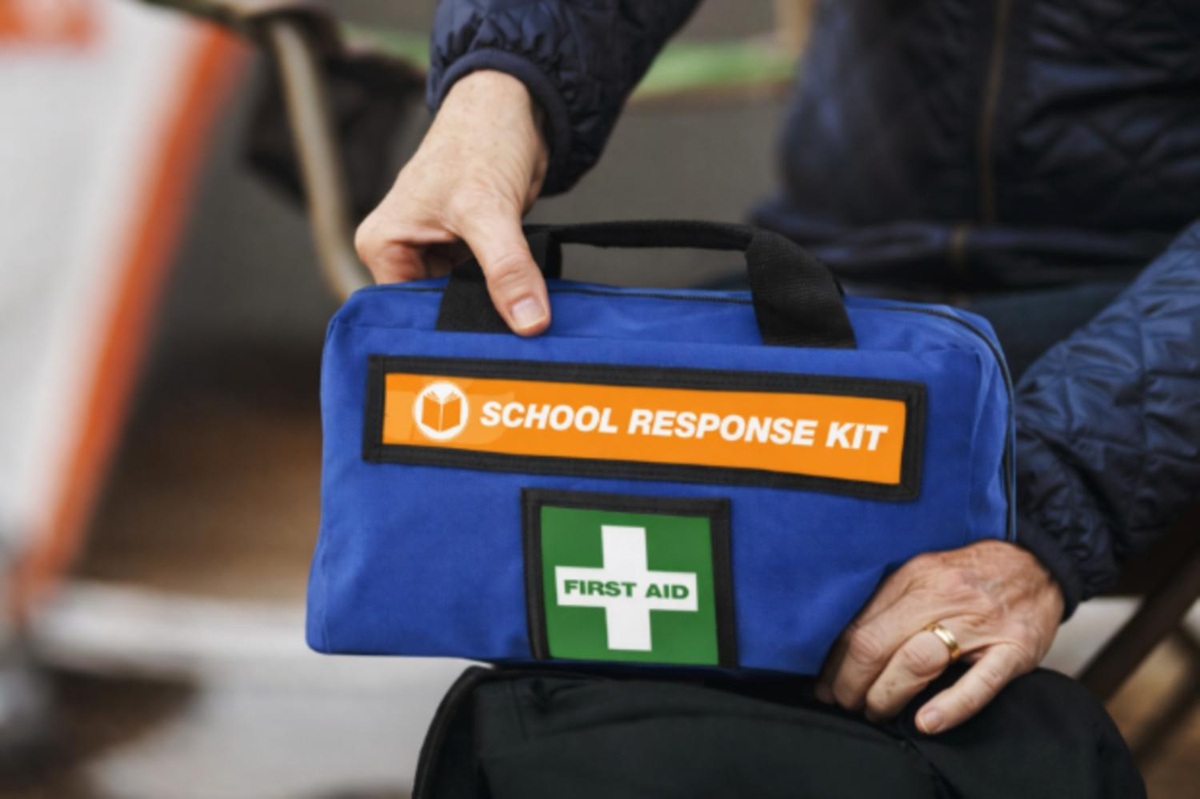
Not every location needs the same setup.
These handle everyday incidents: plasters, wound cleaning, minor burns, and soft tissue injuries. A compact wall-mounted kit or soft-pack in an accessible location covers most needs.
For off-site activities, you need a different form factor entirely. Hard-case metal boxes are impractical when supervising students at a zoo or on a bushwalk.
High-visibility excursion backpacks with internal compartments let teachers keep both hands free while carrying comprehensive supplies. These should include:
All standard wound care and bandaging supplies
Snake bite module (for any outdoor activity)
Asthma kit
Whistle and torch
Sunscreen and insect repellent
Mobile phone power bank (your link to 000)
School buses and fleet vehicles are legally classified as workplaces. Every vehicle needs a secure first aid kit that won't become a projectile during sudden braking. Focus on trauma supplies, glass-related injury management, and burn treatment.
A first aid kit is only as good as its last audit. Safe Work Australia recommends inspection at least every six months, but for high-traffic school environments, quarterly checks align with the term calendar and catch issues before they become compliance gaps.
Check | Timing | Focus |
Term 1 Reset | Late January | Full compliance audit. Replace all expired items. Verify EpiPen and asthma kit dates for the year. |
Winter Prep | April (Term 1 break) | Restock high-use consumables (plasters, ice packs). Inspect sports kits before the winter season. |
Mid-Year Deep Clean | July (Term 2 break) | Check sterile packaging integrity. Replace moisture-damaged items. |
Camp Prep | September (Term 3 break) | Prepare excursion kits for Term 4. Check snake bite bandages and sunscreen expiry. |
Consider sealing kits with tamper-evident tags. If the seal is broken, staff must report usage immediately, triggering a targeted restock. If the seal is intact at audit time, you only need to check expiry dates—not count every item.
For schools managing dozens of kits across multiple buildings, LFA's refill kits streamline restocking. Instead of ordering 15 individual line items, you purchase one pre-packaged refill that matches your kit contents exactly.
It depends on your state and school population. Victorian schools follow a strict scaling formula: 50–199 people require 4 kits; 200–399 require 6 kits; 600+ require 10+ kits plus a dedicated first aid room. NSW and Queensland use risk-based assessments but mandate at least one kit per floor in multi-storey buildings. The Safe Work Australia baseline is one trained first aider per 50 people in low-risk areas, one per 25 in high-risk areas (science labs, workshops).
Yes. Victoria, NSW, Queensland, and South Australia all mandate general-use autoinjectors regardless of enrolled student diagnoses. Research shows nearly half of school anaphylaxis events involve students experiencing their first-ever reaction with no prior diagnosis.
Safe Work Australia recommends at least every six months. For schools, quarterly checks (once per term) are best practice. High-use items like plasters and ice packs may need mid-term restocking.
HLTAID011 (Provide First Aid) is the comprehensive qualification covering wound management, medical emergencies, and CPR. It's valid for three years. HLTAID009 (Provide CPR) is the CPR-specific component, which should be refreshed annually as practical skills degrade without regular practice.
Yes. Under Schedule 3 provisions, schools can purchase Salbutamol relievers (Ventolin, Asmol, etc.) from pharmacies for first aid purposes with the principal's written authority.
Compliance isn't a one-time purchase. It's an ongoing cycle of assessment, equipment, training, and review.
This term:
Audit your current kits against this checklist
Identify gaps in anaphylaxis and asthma coverage
Check all autoinjector and reliever expiry dates
Verify staff CPR certifications are current (annual refresh for HLTAID009)
Before Term 2: Transition to a sustainable restocking system. Whether that's quarterly refill orders or a full kit replacement cycle, having a process beats scrambling after every incident. LFA First Response works with schools across Australia to simplify this process—from initial kit supply through to ongoing refill management.
At LFA First Response, we supply Australian schools with compliant, pre-stocked school first aid kits, anaphylaxis solutions, asthma kits, and excursion packs—all at wholesale pricing designed for education budgets.
Browse school first aid supplies or contact our team for bulk pricing and tailored recommendations for your campus.
Excursions are a highlight of the school year. A break from routine, a chance to learn outside the classroom, and let’s be honest, a whole lot of fun. But with new environments come new risks. When you’re responsible for a group of kids, safety on school excursions isn’t optional. It’s your top priority.
J
Jason Hitch

Schools are fast-paced environments, and with so many moving parts, health and safety risks can crop up at any moment. From playground slips to medical emergencies, being prepared isn’t optional. It’s essential.
J
Jason Hitch

Emergencies don’t wait for convenient timing, and in a school setting, every second matters. Whether it’s a student fainting in class, a fire alarm going off mid-assembly, or an unexpected allergic reaction in the lunchroom, a school’s safety plan is only as strong as its weakest link.
J
Jason Hitch
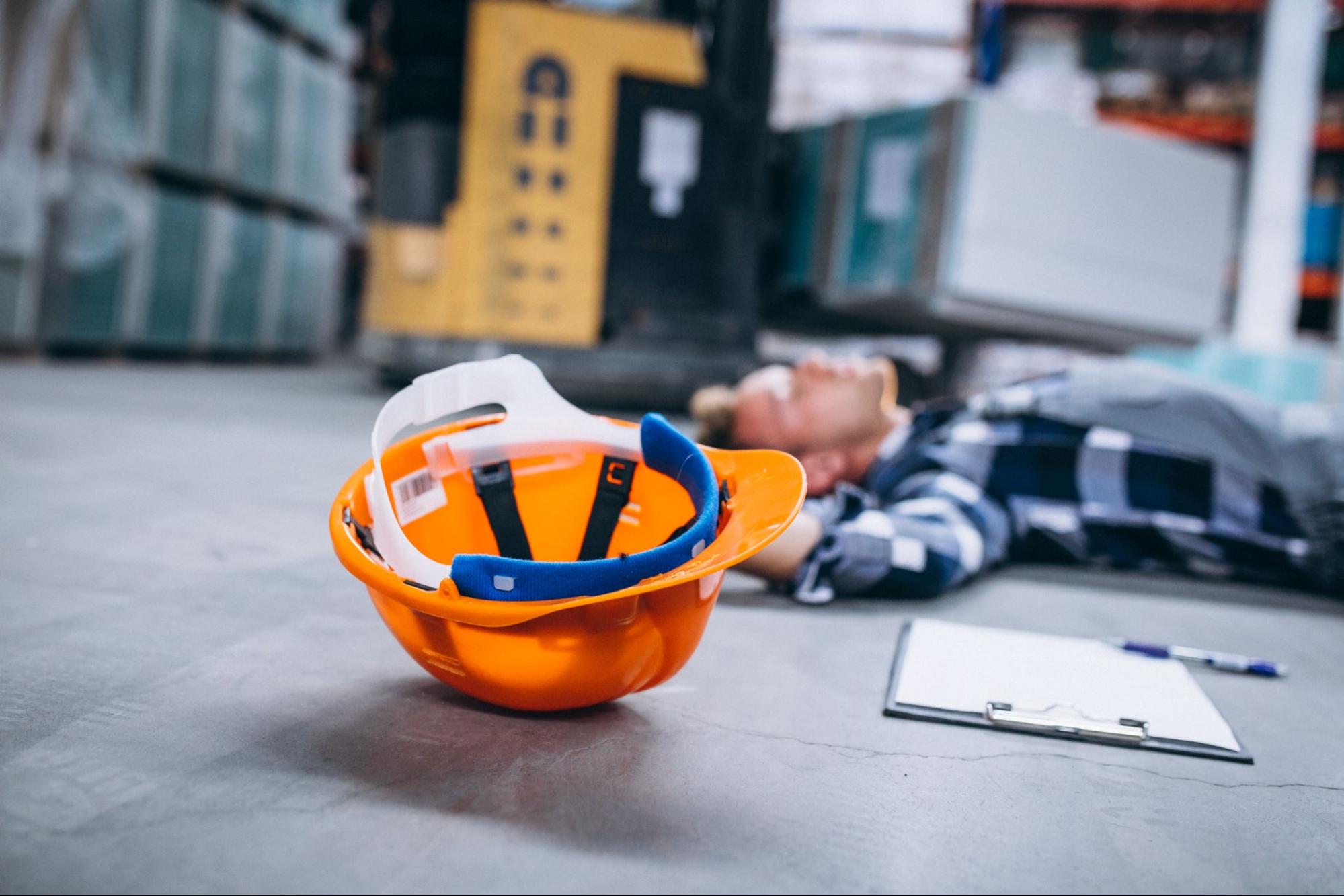
Get first aid for construction right with LFA First Response. Learn about first aiders, kits, placement and compliance for Australian worksites.
J
Jason Hitch